The October 2026 issue · 44 articles
The reading room

The October cover story The Big Comparison
Infrared vs. traditional sauna: which one should you buy?
A traditional sauna gives you a hot room and steam, and infrared runs milder and is often easier to wire. We weigh both against what the research shows.
Read the story 12 min
InteractiveThe Science
Meet the 2,315 Finnish men behind the headlines about saunas and longevity
The famous 40% lower death rate for frequent sauna users comes from 201 Finnish men. Meet all 2,315 of them, one ember at a time.

From the cover
Editors’ selection
Outdoor Saunas
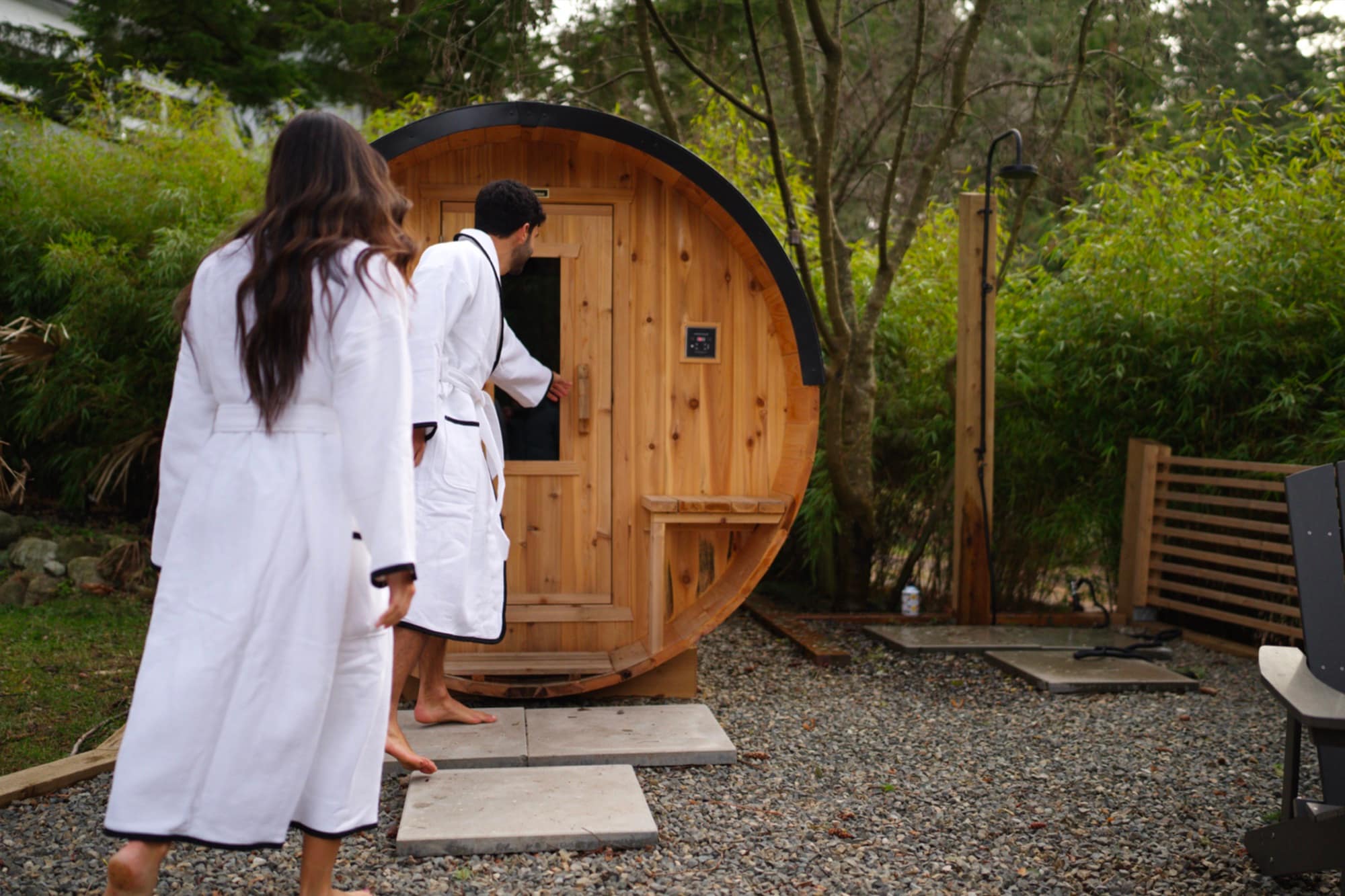
Nootka 8ft Barrel review: is the cedar barrel worth the premium?
Nootka's cedar barrel runs in hotel courtyards from Fairmont to Four Seasons. We checked what it's made of and what it costs all-in, then compared it with the cheaper kits.
8 min read

Heaters & Stoves
What does a sauna cost to run? Work out your cost per session
Running an electric or infrared sauna costs cents a session. We run the formula for electric and infrared heaters and for a wood stove, with real numbers.
7 min read

The Science
The science of sauna: what 20 years of Finnish research found
The KIHD cohort followed 2,315 men for two decades, and the more often they used the sauna, the lower their risk of dying. That link is observational and can't prove cause.
11 min read

Cold Plunge
Which cold plunge tub should you buy? Start with how fast the chiller recovers
Every cold plunge is a box of cold water, and you're paying for the chiller. It sets how cold the water holds and how fast it recovers, and it decides whether you'll ever haul ice again.
7 min read

Infrared Saunas
Sunlighten mPulse review: are the Conquer and the Believe worth the premium?
Sunlighten's flagship line doses each infrared wavelength separately, on programs the company says it built from 37 clinical studies. We read the science behind that claim and say which size to buy.
8 min read

Infrared Saunas
Sun Home Saunas review: what the Cold Plunge Pro and the Luminar are worth
Sun Home's range runs from a $499 infrared blanket to a commercial-grade cold plunge. We set the marketing copy aside and read the specifications to see which pieces hold up.
8 min read
The Sauna Price Index · October 2026
What a sauna costs this month
Median list prices across 99 products in the catalogue, recomputed for every issue.
Read the indexEvery article, by department
Outdoor Saunas · 10
Shop the department
Field Notes
What to sort out before you buy a backyard sauna, from permits to 240V wiring
9 min read

The Big Comparison
Barrel vs. cube: which outdoor sauna shape heats better?
7 min read

Buyer's Guide
Wood-fired or electric sauna: which heat source suits you?
6 min read
Brand Review
Redwood Outdoors review: how the thermowood barrels and cabins compare
7 min read

Brand Review
Dundalk LeisureCraft review: which Canadian Timber sauna fits your yard and budget?
9 min read

Buyer's Guide
Best outdoor saunas: which one should go in your yard?
15 min read
Buyer's Guide
Best outdoor infrared saunas: which cabin can stand the weather?
14 min read
Owner's Guide
Owning a Nootka sauna: what to do before it arrives and every year after
12 min read

Comparison
Nootka vs. Redwood Outdoors: is the cedar barrel worth the extra money?
10 min read

Comparison
Nootka vs. Almost Heaven: which cedar sauna should you buy?
11 min read
Indoor Saunas · 4
Shop the department
Buyer's Guide
Indoor sauna buyer's guide: how to turn a spare room into a hot room
14 min read

Field Notes
The daily sauna: how Finns made heat a habit, and how you can
6 min read
Brand Review
Almost Heaven Saunas review: how the indoor rooms and the barrels compare
8 min read

Buyer's Guide
Best traditional saunas for the home: which hot-rock room should you buy?
14 min read
Infrared Saunas · 4
Shop the department
The Skeptical Read
How to read infrared sauna specs, from low-EMF to chromotherapy
7 min read
The Numbers
Sunlighten mPulse pricing: what to know before you ask for a quote
5 min read

Buyer's Guide
Best saunas with red light therapy: which one fits your routine?
13 min read

Buyer's Guide
Best infrared saunas: which cabin fits your room and your budget?
9 min read
Sauna Blankets & Portables · 2
Shop the department
Heaters & Stoves · 3
Shop the department
Accessories · 2
Shop the department
Aromatherapy · 1
Shop the department
Cold Plunge · 3
Shop the department
Recovery & Tracking · 2
Shop the department
The science and the buying · 4
Why the sauna
The case for heat
Sauna bathing is one of the few wellness habits with two decades of prospective cohort data behind it, and the signal in that data is unusually consistent. The Finnish KIHD study followed 2,315 middle-aged men for over 20 years and found that the more often they sat in the heat, the lower their rates of fatal heart disease and dementia, with a clear dose-response by frequency and session length. Later analyses from the same Kuopio research program linked frequent sauna bathing to lower rates of stroke, in 1,628 men and women, and of high blood pressure. Mechanistic work points to heat-shock proteins, along with plasma-volume and vascular changes much like the ones exercise brings. The cohort data shows an association, and it can't prove the sauna caused those lower rates.
What the research says
Men using a sauna 4–7 times a week had a 50% lower rate of fatal cardiovascular disease and 40% lower all-cause mortality than once-a-week bathers over ~21 years. · JAMA Internal Medicine, 2015
In follow-up analyses, the same frequency band was associated with 66% lower dementia risk and 61% lower stroke risk. It was also associated with 46% lower incident hypertension. · Age and Ageing, 2017
A 2018 review in Mayo Clinic Proceedings concluded sauna bathing is linked to reduced cardiovascular and all-cause mortality and is well tolerated by most people, including many with stable heart disease. · Mayo Clinic Proceedings, 2018
Heat exposure triggers heat-shock proteins and plasma-volume expansion. Both adaptations overlap with moderate exercise, so researchers call sauna an exercise mimetic, with caveats. · Experimental Gerontology, 2021
This is general information and isn’t medical advice. The cohort studies are observational. They show a strong, consistent association and can’t prove the sauna caused it. If you have a serious heart condition or you’re pregnant, ask your doctor before you start regular sauna sessions.