Buyer's Guide
Wood-fired or electric sauna: which heat source suits you?
Go electric if you'll bathe near-daily, since an app preheats the room. A wood stove suits a lake or cabin, where tending the fire is part of the ritual.
By Adam Bognar, Editor

Electric suits near-daily sessions ten steps from the house, and a wood stove belongs at a lake or cabin. We compared both on infrastructure and running cost, because the heat source shapes how often you'll bathe.
Electric heaters make frequent sessions easy
If you want a sauna habit you'll keep up most days, an electric heater makes it easy. You flip a switch or tap an app and step into a hot room 45 minutes later, while dinner's still cooking. Modern units with Wi-Fi or LTE controllers preheat on your commute.
You'll need a dedicated 240V circuit installed to code. After that, it's cheap to run, at well under a dollar a session at average US rates.
| Electric | Wood-fired | |
|---|---|---|
| Getting it hot | Switch or app; Wi-Fi and LTE controllers preheat on your commute | 45 to 60 minutes of tending a fire |
| Infrastructure | Dedicated 240V circuit installed to code | Code-compliant chimney with proper clearances |
| Permits | Electrical permit | No wiring permit; chimney and clearance rules apply |
| Running cost | Well under $1 a session at average US rates | A few dollars of firewood a session |
| Grid | Needs power | None; works at a cabin or lakeside |
| Temperature reached | 80 to 100°C | 80 to 100°C |
| Best for | Near-daily use ten steps from the house | Destination sessions; sites where trenching power is a project |
| Changing later | Many rooms accept either; decide before you order | Same |
Both fuels reach the same range, so perceived differences in the heat come from stone mass and humidity, along with ventilation.
Where to buy


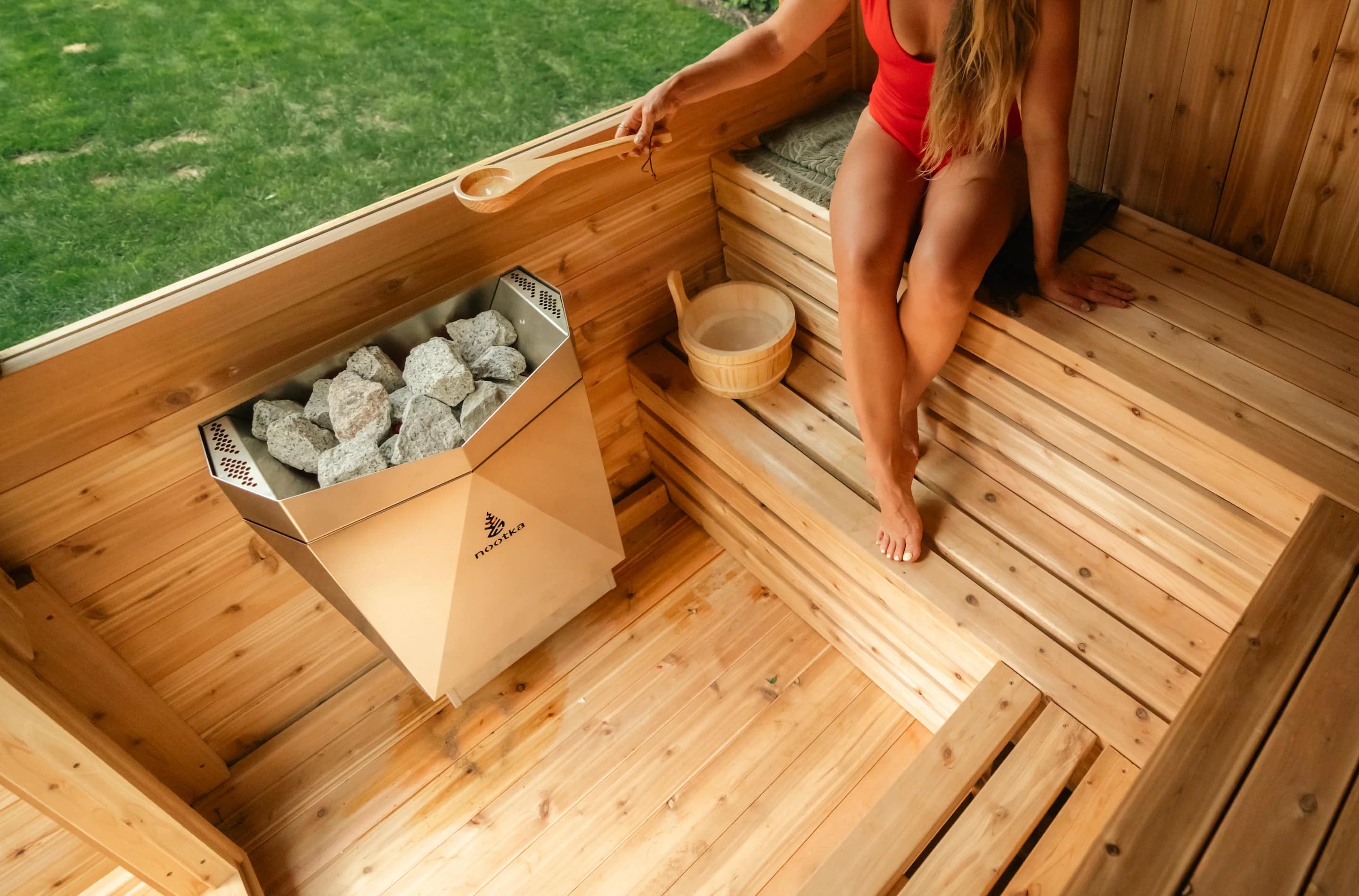
Nootka Smart Sauna Heater (7.5kW / 9kW). Nootka Saunas photography.
See the specifications and priceA wood stove frees the sauna from the grid
A wood stove needs no electrician or wiring permit, and it works off the grid. That makes it the answer for cabins and lakesides, or anywhere trenching power is a project. The fire is part of the appeal, since tending it is a way to decompress.
Budget 45–60 minutes of heat-up and a few dollars of firewood per session. You'll also need a code-compliant chimney with proper clearances.
Where to buy


Logistics break the tie between wood and electric
Purists say wood heat feels softer. Take the labels away and what they're noticing is usually stone mass and humidity, and you can get both either way.
Let logistics break the tie. If your sauna sits ten steps from the house and you want near-daily sessions, go electric. A lake or cabin sauna that you visit as a ritual is where the stove earns its tending.
Where to buy


Nootka Saunas Outdoor Saunas
Nootka 10ft Barrel Sauna
“This longer barrel keeps the 8ft's cedar build and makes room for six.”
Common questions
- Is a wood-fired sauna hotter than electric?
- No. Wood-fired and electric saunas reach the same 80–100°C range. Perceived differences usually come down to stone mass and humidity, with ventilation playing a part. A big-stone electric tower and a wood stove can produce much the same heat.
- Can I convert between wood and electric later?
- Often, yes. Many barrel and cabin models accept either on the room side. The infrastructure differs, with a chimney penetration for wood and a dedicated 240V circuit for electric. Decide before you order, because retrofitting either is doable but costs more than choosing right the first time.
Sources
- 1.Association Between Sauna Bathing and Fatal Cardiovascular and All-Cause Mortality Events. JAMA Internal Medicine, 2015.
- 2.NFPA 70: National Electrical Code (NEC). National Fire Protection Association, 2023.
- 3.Electric Power Monthly: Average Price of Electricity to Ultimate Customers. U.S. Energy Information Administration, 2025.
We review from makers’ documentation, owner reports and published research. How we choose products and write reviews.