Buyer's Guide
Which cold plunge tub should you buy? Start with how fast the chiller recovers
The chiller decides which of the four cold plunge price tiers you need. We weigh ice against compressors and 37°F against 50°F, and pick a tub for your yard.
By Adam Bognar, Editor
Choose a cold plunge tub by its chiller. We sorted the four price tiers by how cold each keeps the water and how fast it gets cold again after you climb out, and looked for where the value sits. Those two numbers decide whether you'll still be plunging in six months. The market matured fast around the compressor. Acrylic versus thermowood and a barrel versus a box come down to preference, as does an inflatable versus a fixed tub.
Passive tubs need ice several times a week in summer
A passive tub is a well-insulated vessel and nothing more, so you chill it with ice. Redwood's Alaskan is the archetype. It's a 130-gallon thermowood barrel with a liner, sized for one person at full immersion, and it needs no electricity. In winter, in a cold climate, a passive tub costs close to nothing to run.
The arithmetic turns in spring. From roughly May onward you're buying bags of ice several times a week, and that's when a passive owner tends to stop plunging or start pricing chillers. Buy passive if your winters are long and your budget is firm. A passive tub also lets you find out whether the habit sticks before you spend five figures.
Where to buy
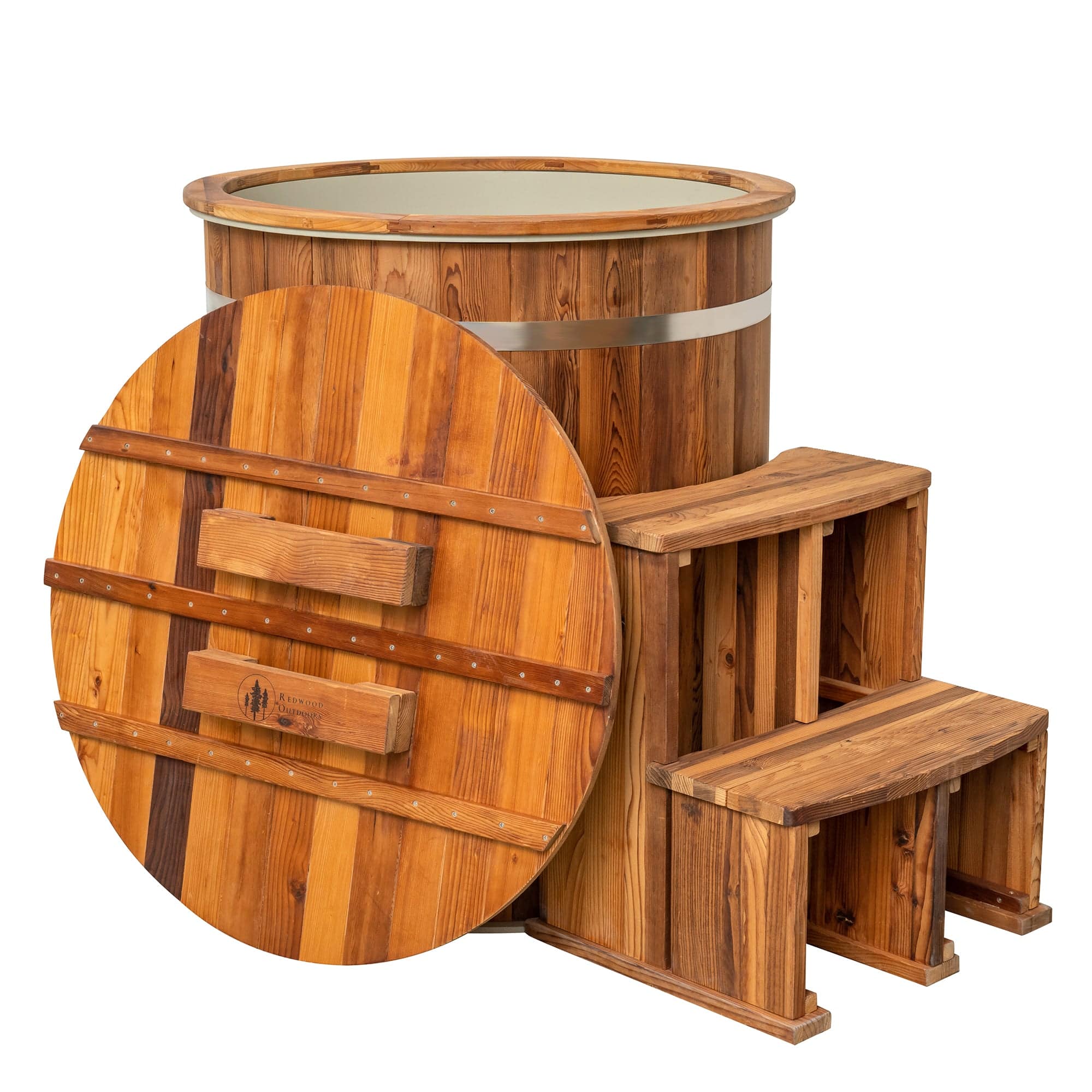


Alaskan Cold Plunge Tub. Redwood Outdoors photography.
See the specifications and priceAn entry chiller runs cold on a standard outlet
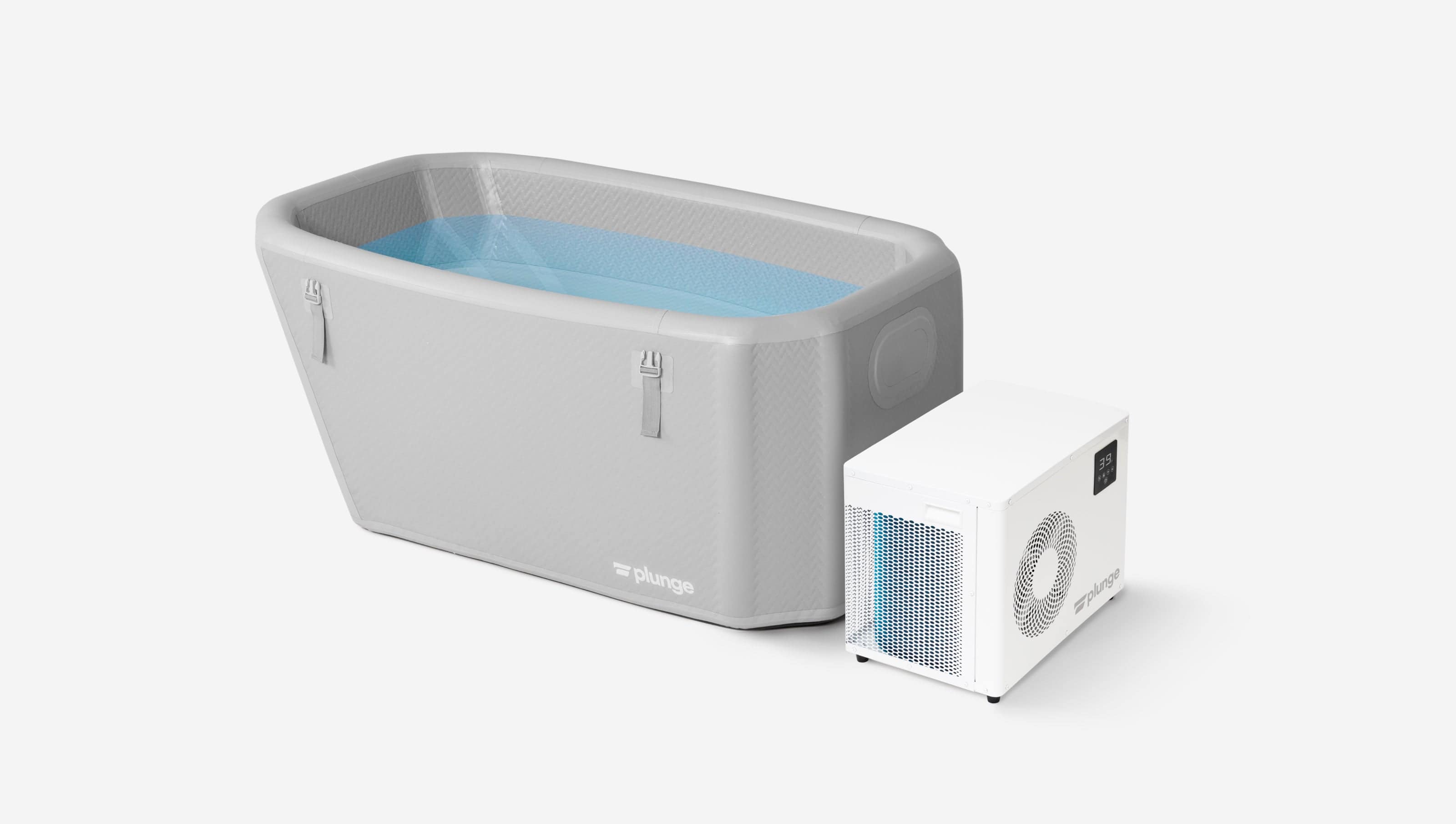
The first powered tier is where the habit usually survives, and Plunge Air defines it. The inflatable ~105-gallon tub sets up in about fifteen minutes and comes with a compact chiller that holds 39°F on an ordinary 110V/15A outlet. Because it packs down, it's the only serious option for renters and anyone who may move.
Plunge Air's 39°F counts as cold, and it sits far closer to the 37°F of the tier above than to a tub that depends on ice in July. The shell is where it gives ground. Inflatable walls make a worse backrest than acrylic and won't last as long.
Where to buy
The flagship Plunge is our default recommendation
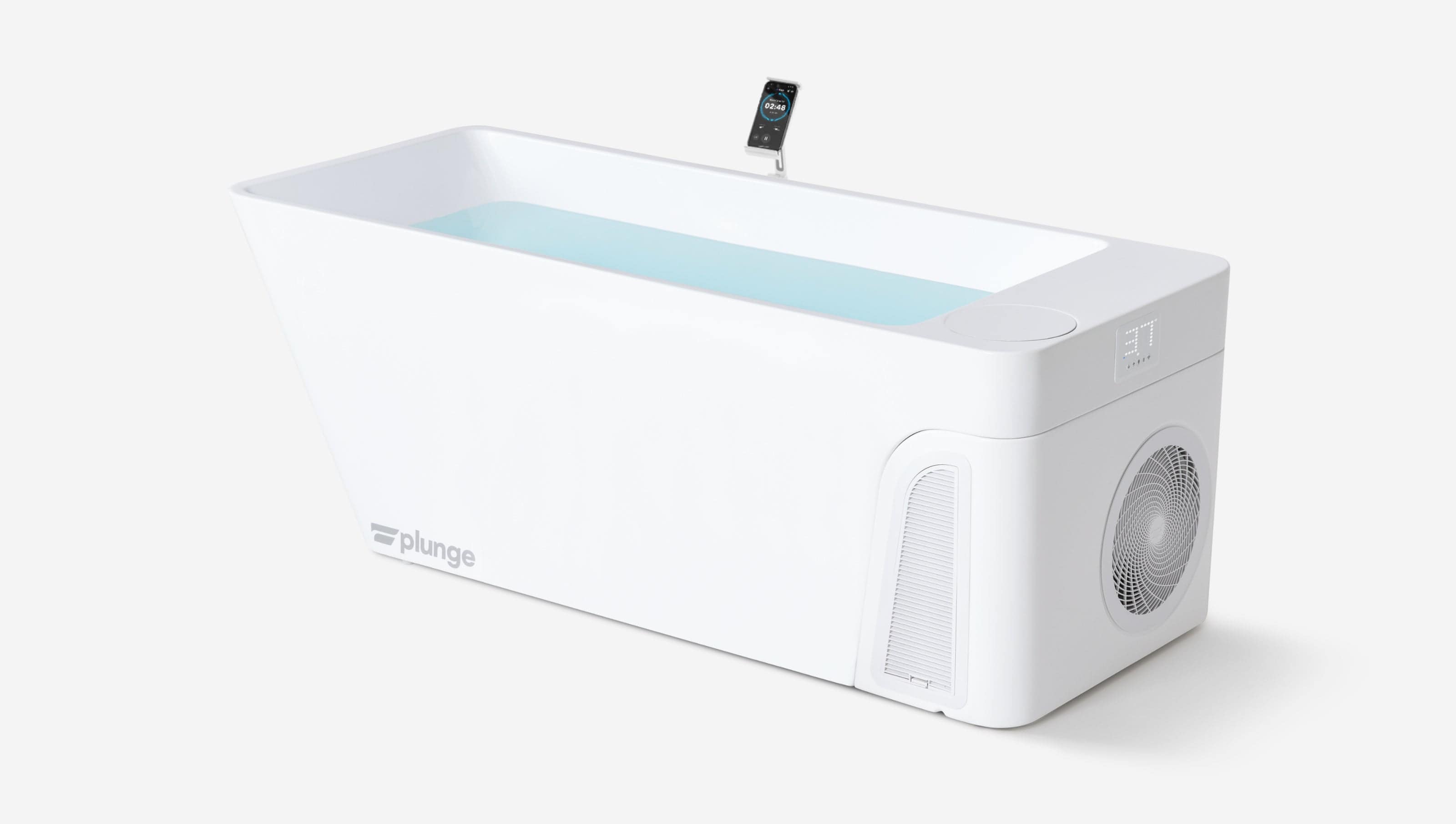
The flagship Plunge pairs a 105-gallon acrylic body with the Pro Chiller Gen 2, which reaches 37°F and pulls heat at up to 12°F per hour. We read that recovery figure before any other. A tub that needs all day to get back to temperature gets one plunge from one person.
Built-in filtration and ozone sanitation count for as much, because maintenance is what wears down a cold-plunge habit. Like the rest of the range, it runs on a dedicated 120V/15A circuit, so you won't need an electrician. Unless you need the top tier's heating or throughput, start here.
Where to buy
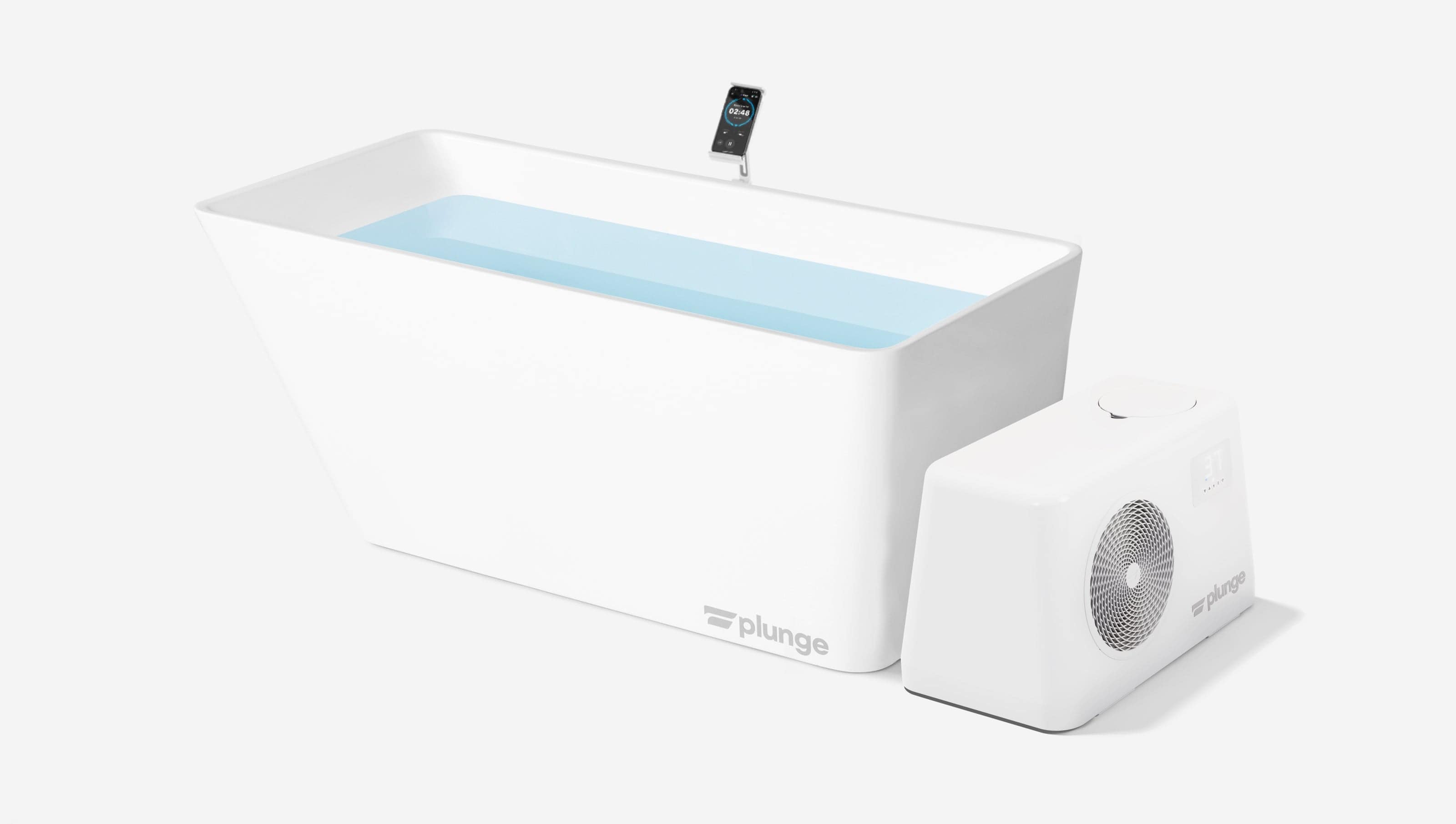


The Plunge (Original). Plunge photography.
See the specifications and priceContrast and heavy shared use justify the top tier
Contrast is one reason to pay for the top tier. Plunge's All-In Gen 2 chills to 37°F and heats to 104°F in the same tub, and it holds cold even in 120°F ambient heat. The All-In Gen 2 puts the Nordic hot-cold cycle in one vessel, which suits a hot climate or a patio with no room for two units.
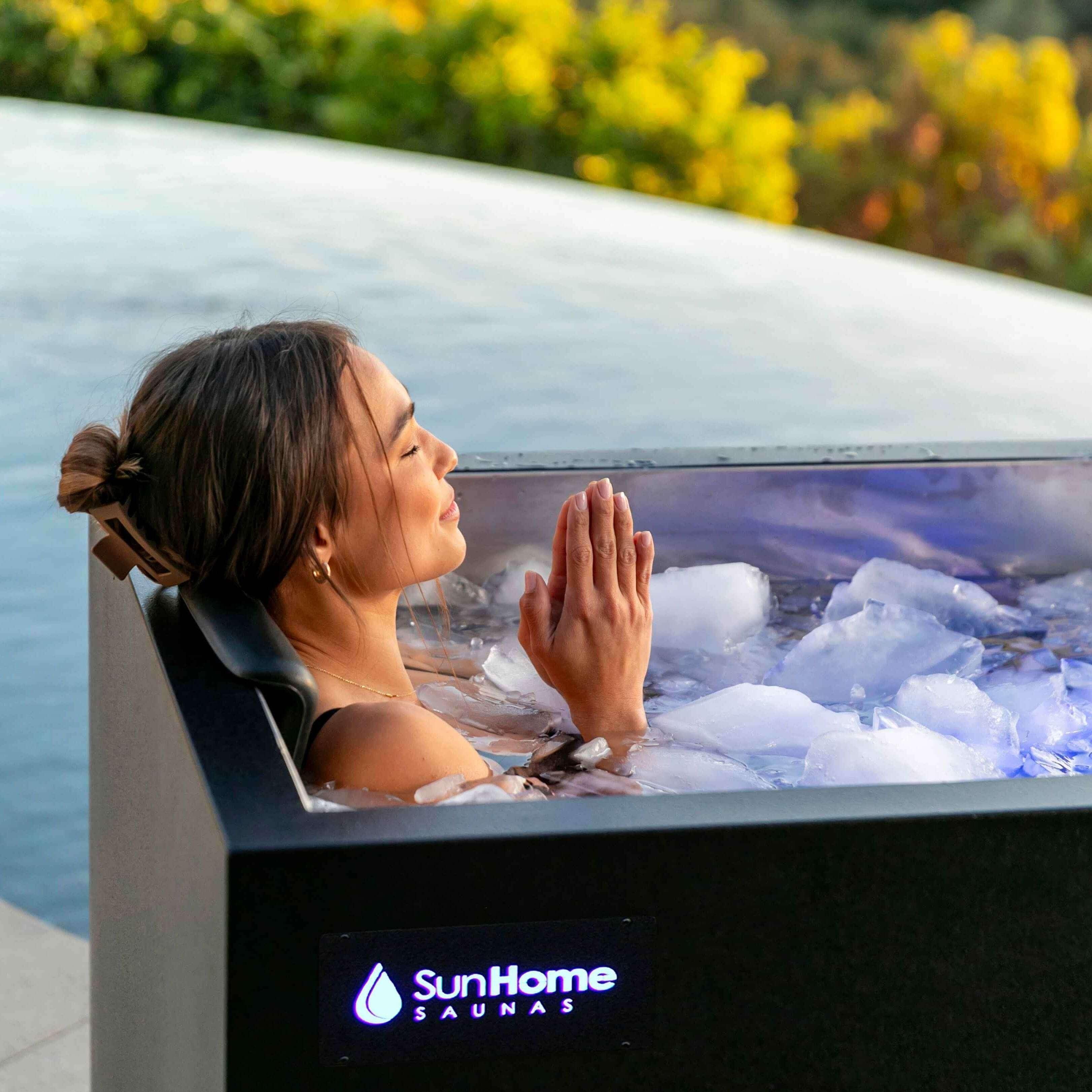
Throughput is the other. Sun Home says the Cold Plunge Pro's 1HP chiller takes 150 gallons down to 28°F, and ozone and UV sanitize the water behind a 20-micron filter. Those specs fit a gym, or a household with several daily plungers where the water never gets time to rest.
We wouldn't pay this tier's price for colder water alone. If you plunge by yourself once a day, this tier buys headroom you'll never use.
Where to buy
Check the circuit and the recovery rate before you buy
Check the circuit first. Nearly every chiller here runs on a standard 120V outlet, but it should be a dedicated one, because sharing it with a freezer will trip it. Then ask how many degrees per hour the chiller pulls, along with how cold it gets. Recovery rate decides whether a second person can plunge right after the first.
Sanitation needs ozone or UV plus a real sediment filter, or you'll drain and refill a heavy tub far more often than you expect. Siting comes last. A full plunge weighs upward of 1,000 lb, so it needs a pad or a deck rated for it, and it should sit close enough to the sauna that you'll cross between them in February.
Common questions
- Do I need a chiller, or is ice good enough?
- Ice is good enough for a passive tub through winter in a cold climate. Summer is the problem, because from late spring you're buying ice several times a week, and that cost and hassle tend to end a cold-plunge habit. If you know you want to plunge year-round, get the chiller. Its convenience earns its keep well before the saved ice covers the price.
- How cold does a cold plunge need to be?
- Cold plunge water belongs in the commonly used range of roughly 50°F down to the high 30s, and colder isn't automatically better. Most of the adaptation response is available across that band, and the temperature changes how long you can stay in. For a single user, a tub holding 39°F is not meaningfully worse than one holding 37°F. The top tier's sub-30°F capability is there for fast recovery under heavy shared use, and it won't buy a better plunge.
- What electrical work does a cold plunge need?
- A cold plunge needs less electrical work than a sauna. Every chiller tub covered here runs on a standard 120V circuit at 12–15A, so you won't need a 240V hardwire or panel work. It does want its own dedicated circuit, plus a GFCI-protected outdoor outlet if it sits outside.
- Can I use one tub for both hot and cold?
- Yes. You have to buy a tub built for both jobs. Plunge's All-In Gen 2 chills to 37°F and heats to 104°F in the same vessel, which makes true contrast therapy possible in a single footprint, and it's the right call where space or climate rules out a plunge alongside a sauna. With room for both, a dedicated hot room and a dedicated cold tub still give the better experience.
Sources
- 1.Altered brown fat thermoregulation and enhanced cold-induced thermogenesis in young, healthy, winter-swimming men. Cell Reports Medicine, 2021.
- 2.Benefits and risks of sauna bathing. The American Journal of Medicine, 2001.
- 3.Cardiovascular and Other Health Benefits of Sauna Bathing: A Review of the Evidence. Mayo Clinic Proceedings, 2018.
We review from makers’ documentation, owner reports and published research. How we choose products and write reviews.