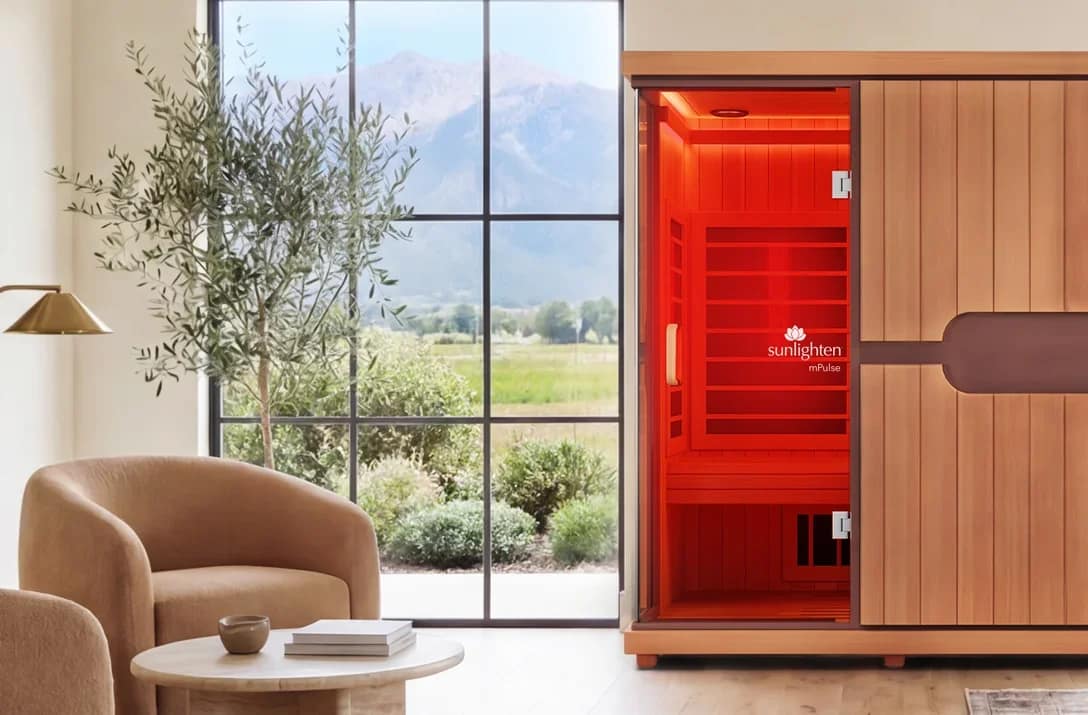
Feature Review
Sunlighten mPulse review: are the Conquer and the Believe worth the premium?
A tablet runs the mPulse and doses red light and near-, mid- and far-infrared separately. We checked PulseIQ against the studies and match each cabin to a buyer.
By Adam Bognar, Editor
The Sunlighten mPulse is worth its quote if you'll use PulseIQ, which drives red light and each infrared band separately from an Android tablet in the wall. The two-person Believe fits a couple. We compared the Believe with the three-person Conquer and read Sunlighten's claims against the research. The line answers a fair criticism, which holds that most full-spectrum saunas blend near-, mid- and far-infrared into one undifferentiated glow and call it versatility. Its preset programs carry names like Detox and Heart Health. Sunlighten sells it by quote, at roughly twice the price of a good far-infrared cabin.
An Android tablet runs the mPulse's eucalyptus cabin
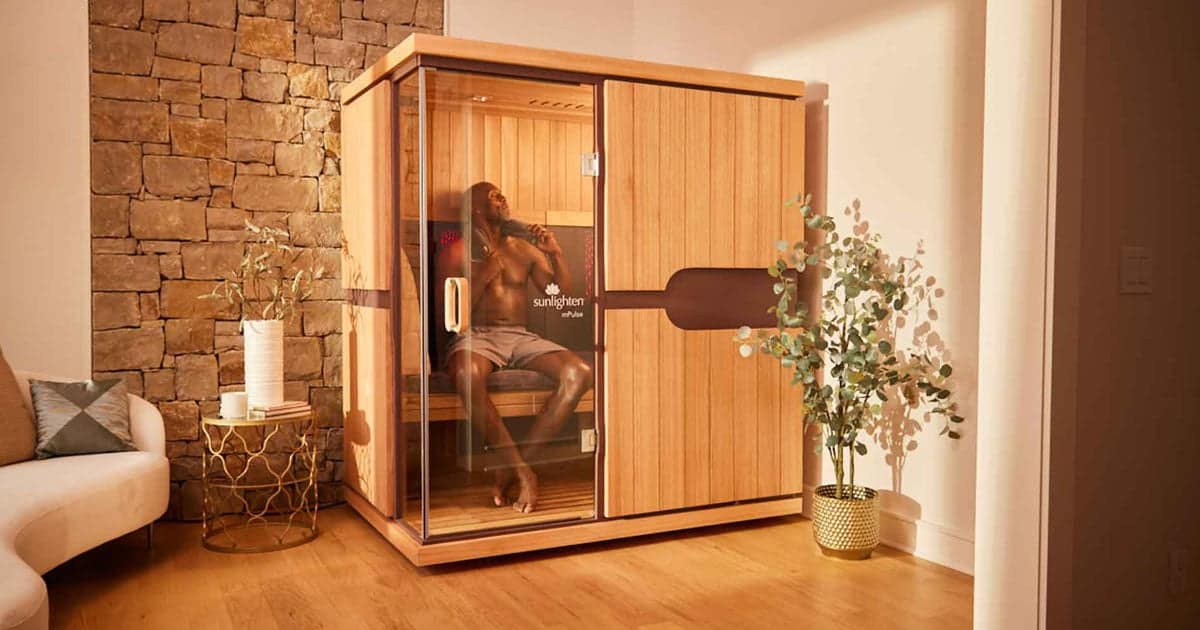
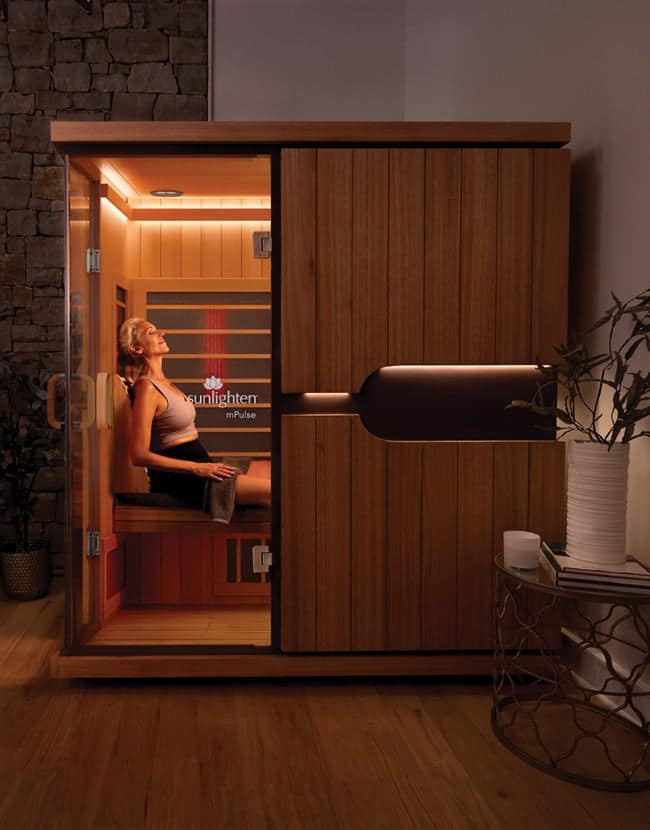
Sunlighten builds the mPulse as a kiln-dried eucalyptus cabin around its patented SoloCarbon heater panels. CELLIANT fabric heater covers line the interior walls, and the chromotherapy lighting sits recessed. A built-in Android touchscreen runs the show, and you can start a session from it or from the phone app over Wi-Fi. Either one will preheat the room or schedule a session for later, and yes, the tablet streams.
The model names mark sizes. The Believe seats two and the Conquer seats three, with identical technology inside. The tablet puts an operating system where a conventional infrared sauna has a thermostat, and Sunlighten's pitch rests on that software. Decide how much it matters to you before you judge the price.
Where to buy
Sunlighten Infrared Saunas
Sunlighten mPulse Conquer
“Sized for three or four, this Sunlighten shares the Believe's strengths and caveats.”

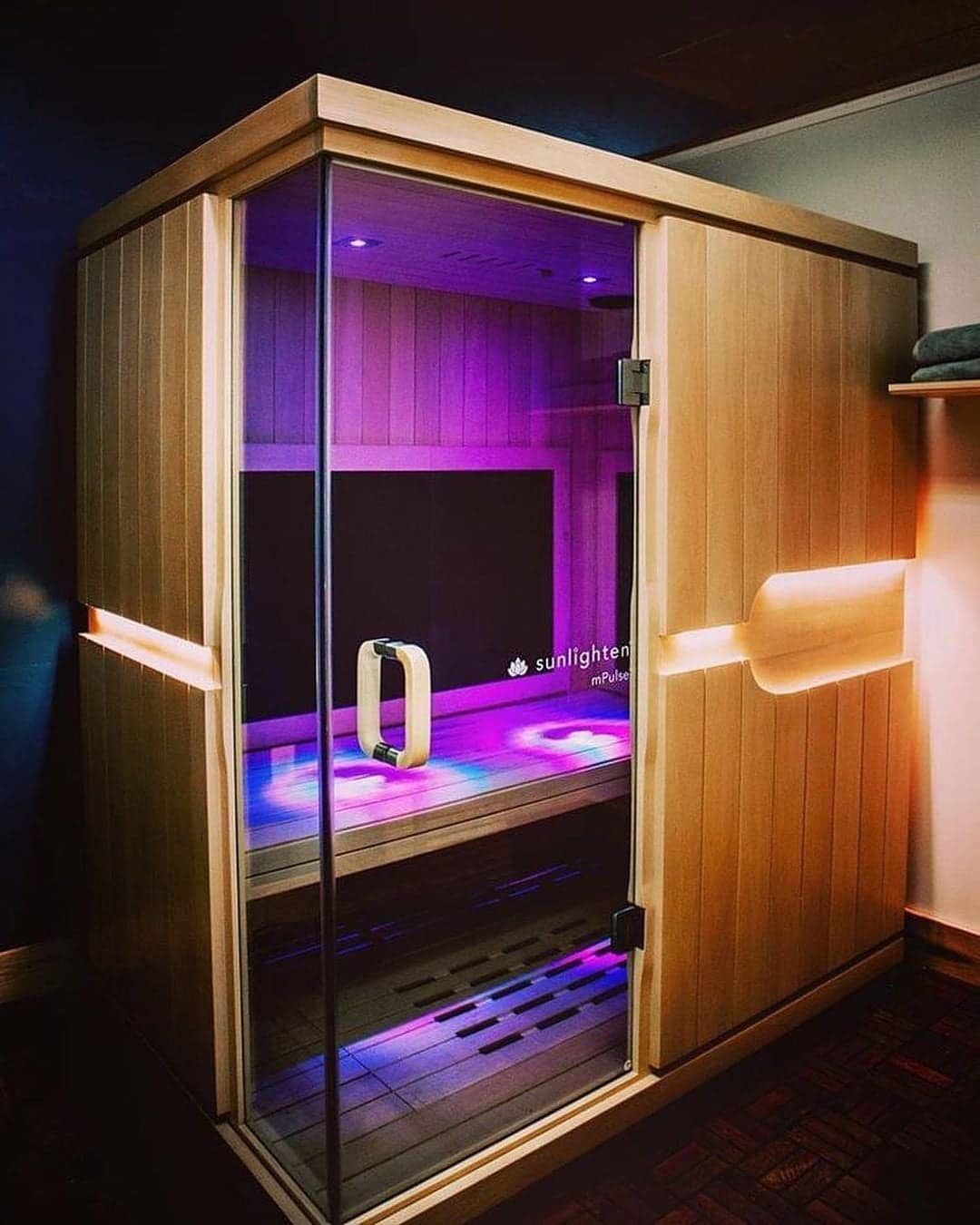
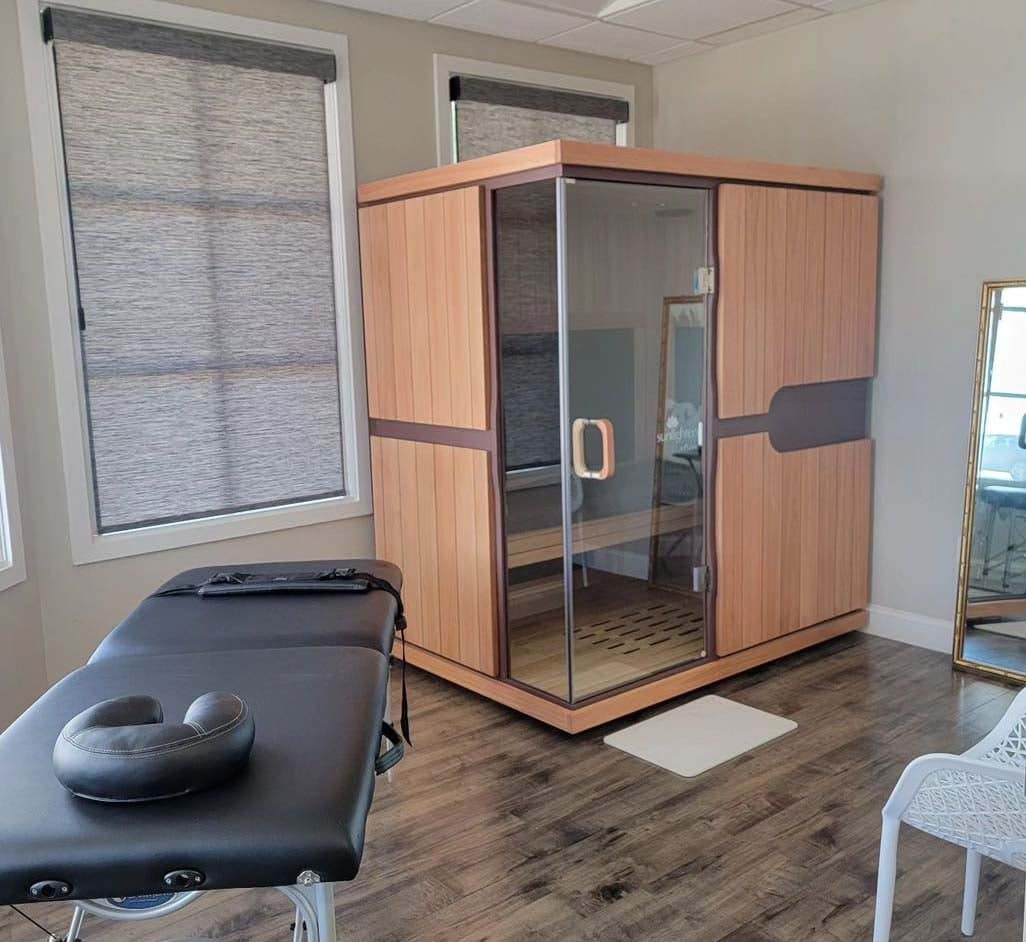
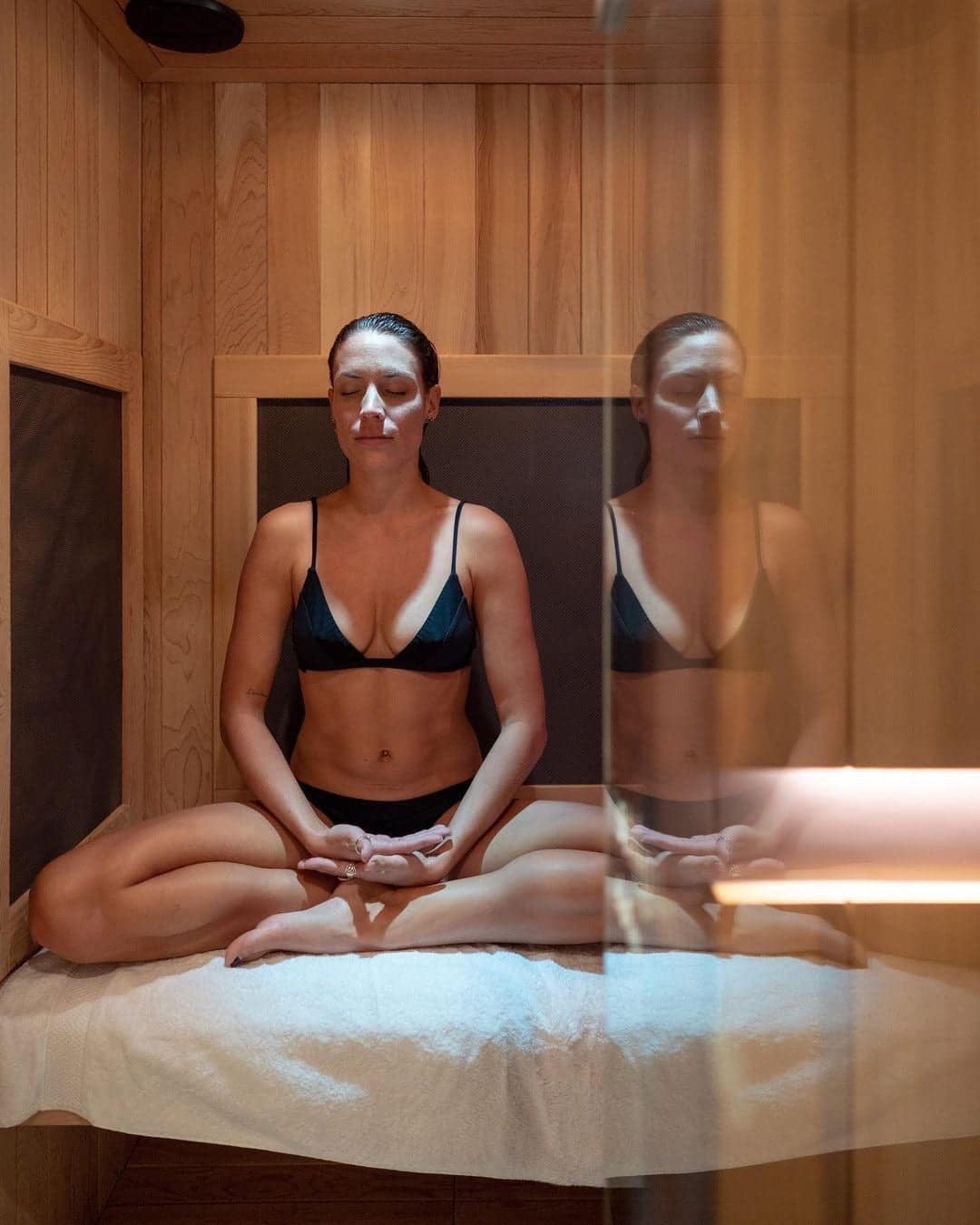
Sunlighten mPulse Conquer. Sunlighten photography.
See the specifications and priceNo mainstream rival matches PulseIQ's separate wavelength control
PulseIQ sets the mPulse line apart by controlling red light and near-, mid- and far-infrared independently. The bands reach different depths, and PulseIQ sets each one's intensity and its point in the session. Sunlighten argues that each wavelength does its best work at a specific dose, which a blended cabin can't deliver. The argument holds as far as it goes, and no mainstream competitor does it.
The size of the benefit is where Sunlighten's case gets thin. The strongest clinical evidence for infrared sauna still comes from far-infrared heat used repeatedly, and every far-infrared cabin already delivers that band. PulseIQ gives you the widest and most controllable spectral toolkit on the market. The peer-reviewed research doesn't show that the toolkit doubles the benefit, so we'd buy it for the capability and wouldn't count on a multiplier.
The programs help most by making sessions easy to repeat
The presets are where the tablet earns its keep. Detox, Weight Loss, Heart Health, Relaxation, Muscle Recovery and Anti-Aging each sequence heat and wavelengths toward a goal, with a Customize slot beside them, so you choose a goal and leave the temperature to the program. Sunlighten says it built the programs from 37 clinical studies. For its Heart Health protocol it cites a 2005 university study, run on its own heaters, that found a 6.5 mmHg drop in systolic blood pressure.
We treat that result the way we'd treat any science a manufacturer funds. It points the same way as the independent literature, where regular sauna use is associated with cardiovascular benefit, but that literature covers frequent heat over months and says nothing about any specific preset. The programs' main value is behavioral. They make a session effortless to start and pleasant to repeat, and repetition is the only variable the research is unambiguous about.
Where to buy
Sunlighten Infrared Saunas
Sunlighten mPulse Believe
“Full-spectrum is done properly here, and it pays off if you'll use every band.”
Headcount decides between the Conquer and the Believe
Both cabins share the same technology, so we'd choose on footprint and budget. The Believe is the two-person cabin, quoted from about $7,000. The three-person Conquer starts from about $8,000, and a loaded one with a wood upgrade and current accessories can run well past $9,800.
Our sizing advice is the same as for any sauna. Buy for the number of people who'll sit in it every week, and leave the housewarming guests out of the count. A couple who saunas together fits the Believe. The Conquer earns the extra money if a third seat will get used, or if you'd like room to stretch out on your own.
Whatever you're quoted, ask what promotion is live. Sunlighten runs rotating offers, and swings of 10–15% are common. Our mPulse pricing decoder lays out the full price ladder, including the models on either side of these two.
Where to buy
Sunlighten Infrared Saunas
Sunlighten mPulse Believe
“Full-spectrum is done properly here, and it pays off if you'll use every band.”
Sunlighten Infrared Saunas
Sunlighten mPulse Conquer
“Sized for three or four, this Sunlighten shares the Believe's strengths and caveats.”
Sunlighten claims low EMF, and the 240V circuit costs extra
The cabin's build matches its price. Sunlighten makes it from eucalyptus it says is sustainably sourced, where budget boxes use softwood, and adds thick insulation and a finish that reads as furniture more than kit.
Sunlighten's EMF story is strong too. Its manufacturing process cuts electromagnetic fields to levels the company describes as virtually undetectable, which matters if you're buying on the EMF figure. In infrared marketing it often is, so give our decoder on the subject ten minutes before you read any brand's claims.
Either cabin also needs a dedicated 240V hardwired circuit. An electrician does that job, and your panel's spare capacity sets the price, which falls outside Sunlighten's quote. Running cost barely registers, since an infrared cabin pulls less power than a traditional heater. Near-daily sessions come to a few dollars a week at average rates.
Who should buy the mPulse?
Buy the mPulse if you want the most controllable infrared sauna made and the quote fits without wincing. It's a luxury done properly. Sunlighten owns the smart full-spectrum idea, and this is its best version, with separate dosing for each wavelength and presets you can start from your phone. Before you sign, make sure you'll use the part you're paying for.
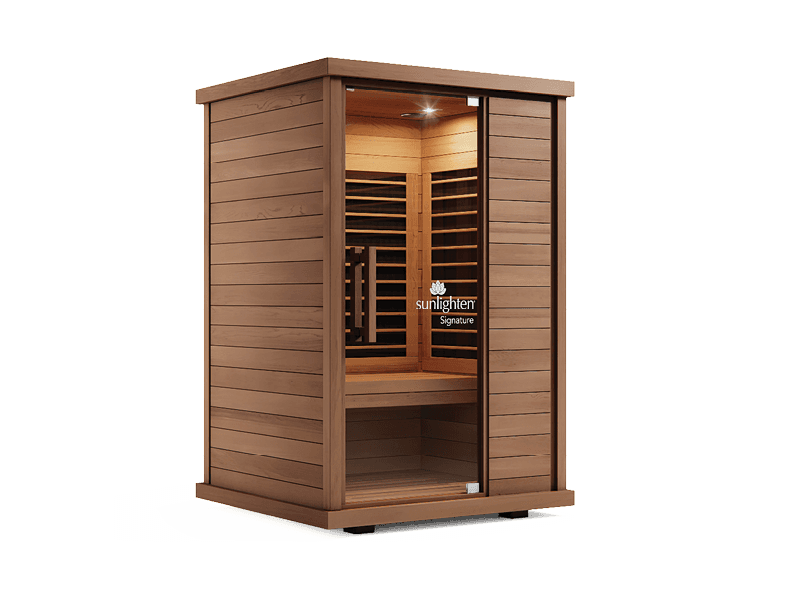
Skip it if what you want is the health habit. The evidence-backed core of infrared sauna is repeated far-infrared heat, and Sunlighten's own single-band Signature II delivers that in the same build quality for $5,599 listed, which is thousands under an mPulse quote. Weighing infrared against a traditional hot room at this budget is a different decision with its own tradeoffs, and our infrared-versus-traditional hub walks through it.
Where to buy
Common questions
- Is the Sunlighten mPulse worth the money?
- The Sunlighten mPulse is worth the money if you'll use its wavelength control and programs. Nothing else doses red light and each infrared band separately, and the build quality matches the price. If you mainly want the core sauna habit, the evidence supports repeated far-infrared heat, and Sunlighten's own Signature II or any good far-infrared cabin delivers that for thousands less.
- How much does the mPulse Conquer cost?
- Quotes for the three-person mPulse Conquer start around $8,000, and loaded configurations run well past $9,800. Sunlighten sells by consultation with rotating promotions, and 10–15% off is common, so ask what offer is live before you accept a number. The two-person Believe starts around $7,000.
- What's the difference between the mPulse Conquer and Believe?
- Only size and price differ. The Believe is the two-person mPulse and the Conquer is the three-person one, and both run the same PulseIQ wavelength control on SoloCarbon heaters, with the same tablet and programs. We'd buy for the number of people who'll sauna weekly, and a three-person cabin also makes a roomier solo sauna.
- Does the mPulse need special electrical work?
- Yes. The mPulse needs a dedicated 240V hardwired circuit, and the electrician who installs it bills on top of the sauna quote. Electricity to run it is the cheap part. Infrared cabins draw less than traditional heaters, so even near-daily use adds only a few dollars each week at average US rates.
Sources
- 1.Waon Therapy for Managing Chronic Heart Failure: Results From a Multicenter Prospective Randomized WAON-CHF Study. Circulation Journal, 2016.
- 2.Cardiovascular and Other Health Benefits of Sauna Bathing: A Review of the Evidence. Mayo Clinic Proceedings, 2018.
- 3.Electric Power Monthly: Average Price of Electricity to Ultimate Customers. U.S. Energy Information Administration, 2025.
We review from makers’ documentation, owner reports and published research. How we choose products and write reviews.

