Brand Review
Plunge review: how to choose between the Air, the Original and the All-In Gen 2
Plunge's three tubs hold roughly the same 105 gallons and sit about $4,500 apart, so you're choosing a compressor. We'd put most buyers in the Original.
By Adam Bognar, Editor

Of Plunge's three cold plunges, most buyers should get the Original. We compared them on price and spec, and they sit about $4,500 apart while holding roughly the same 105 gallons on roughly the same household circuit. Since the footprint barely changes as the price climbs, the extra money goes into the compressor. Plunge made the cold plunge home equipment, so there's no stock tank to keep buying ice for.
The chiller sets the three Plunge tubs apart
At the prices we checked on Oct 5, 2026, the Air costs $5,490, the Original $8,490 and the All-In Gen 2 $9,990. Plunge charges $500 more on each to add its heater. All three run on a standard 120V circuit at 12 to 15A, so an electrician doesn't appear in any of these prices.
The Air bottoms out at 39°F, while the Original reaches 37°F and pulls up to 12°F an hour back out of the water. With the air as hot as 120°F, the All-In still holds 37°F, and it can run the tub the other way, up to 104°F. Plunge has since expanded into saunas, but we cover only the plunges here.
Where to buy
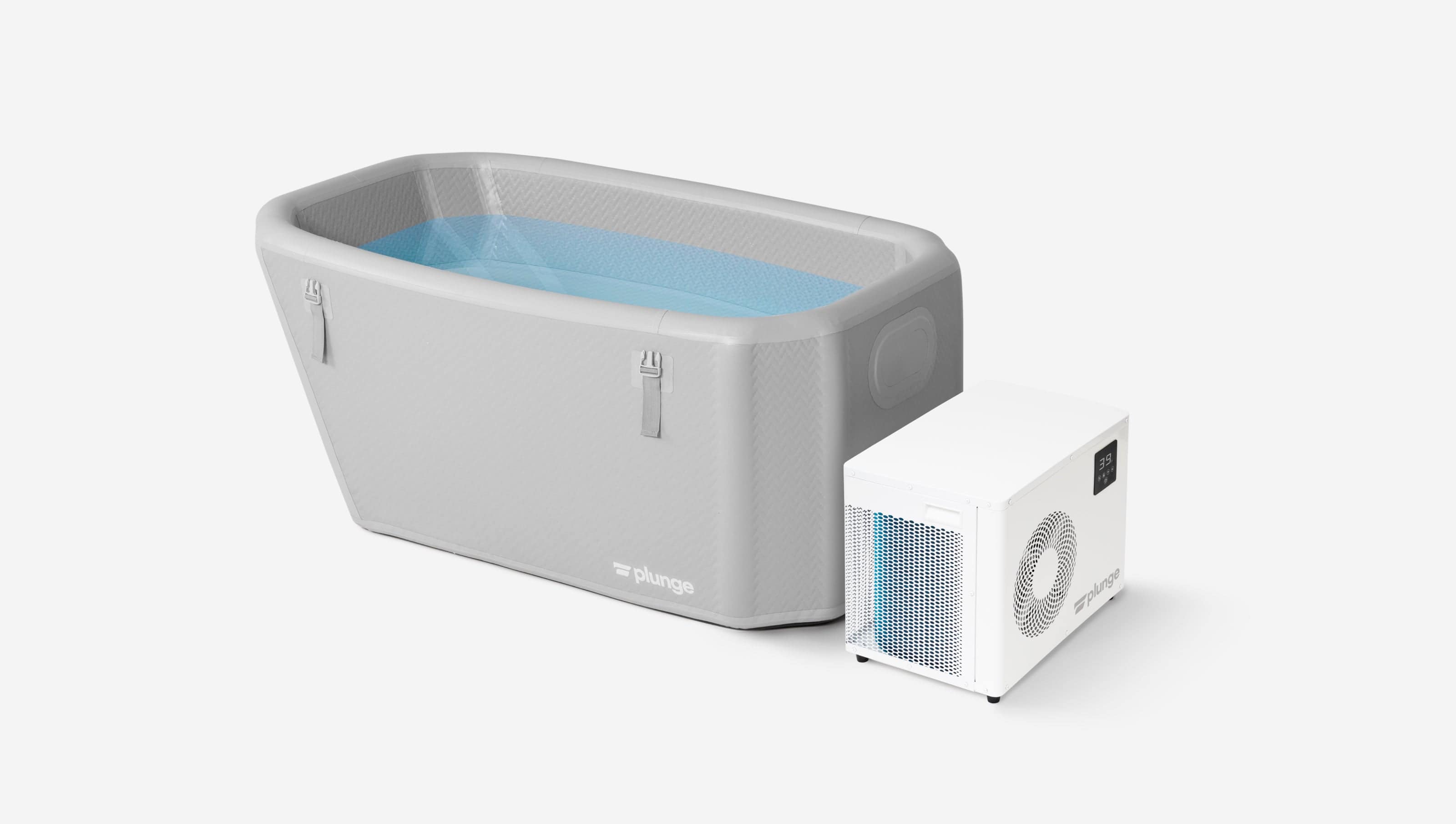
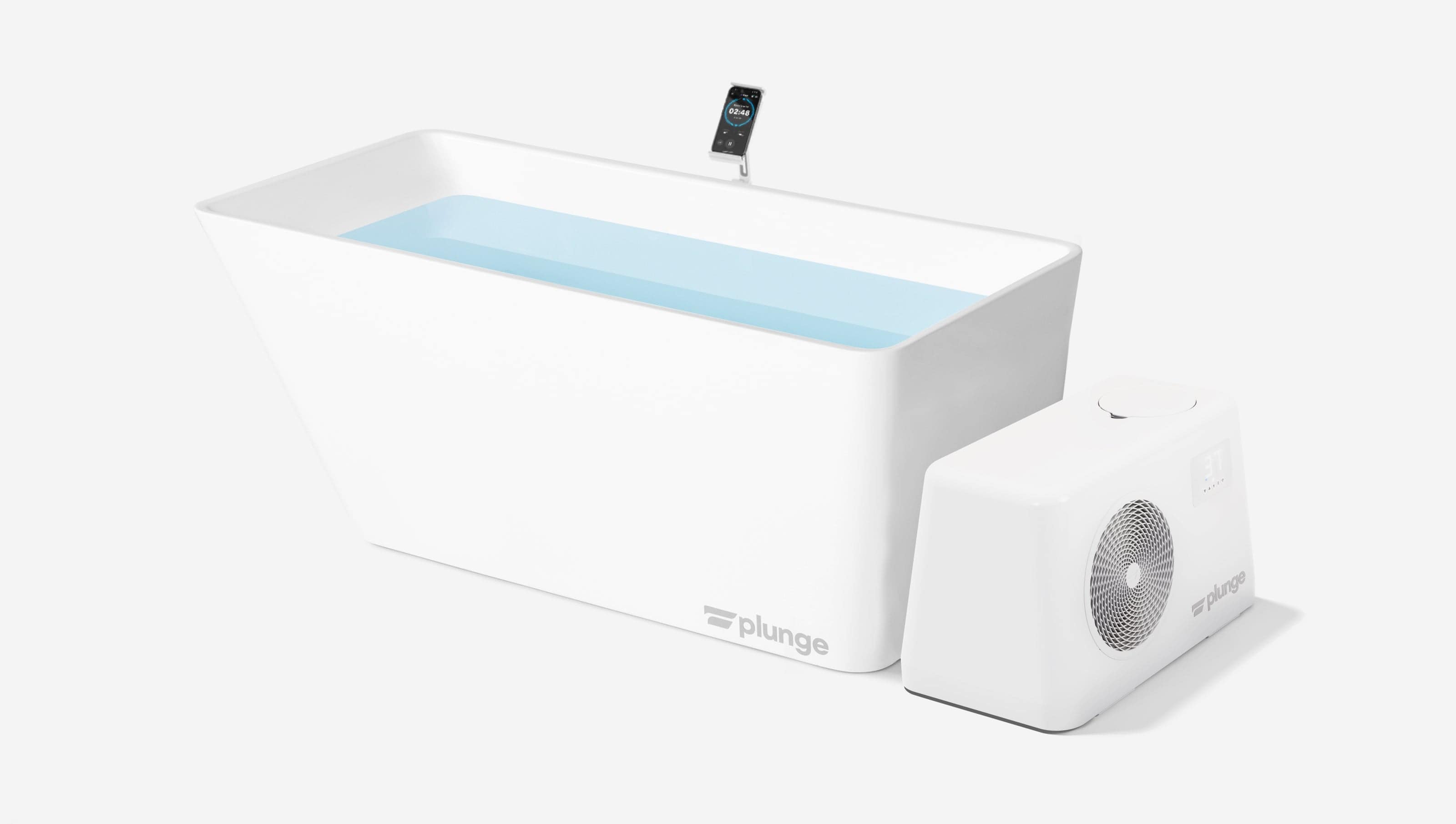
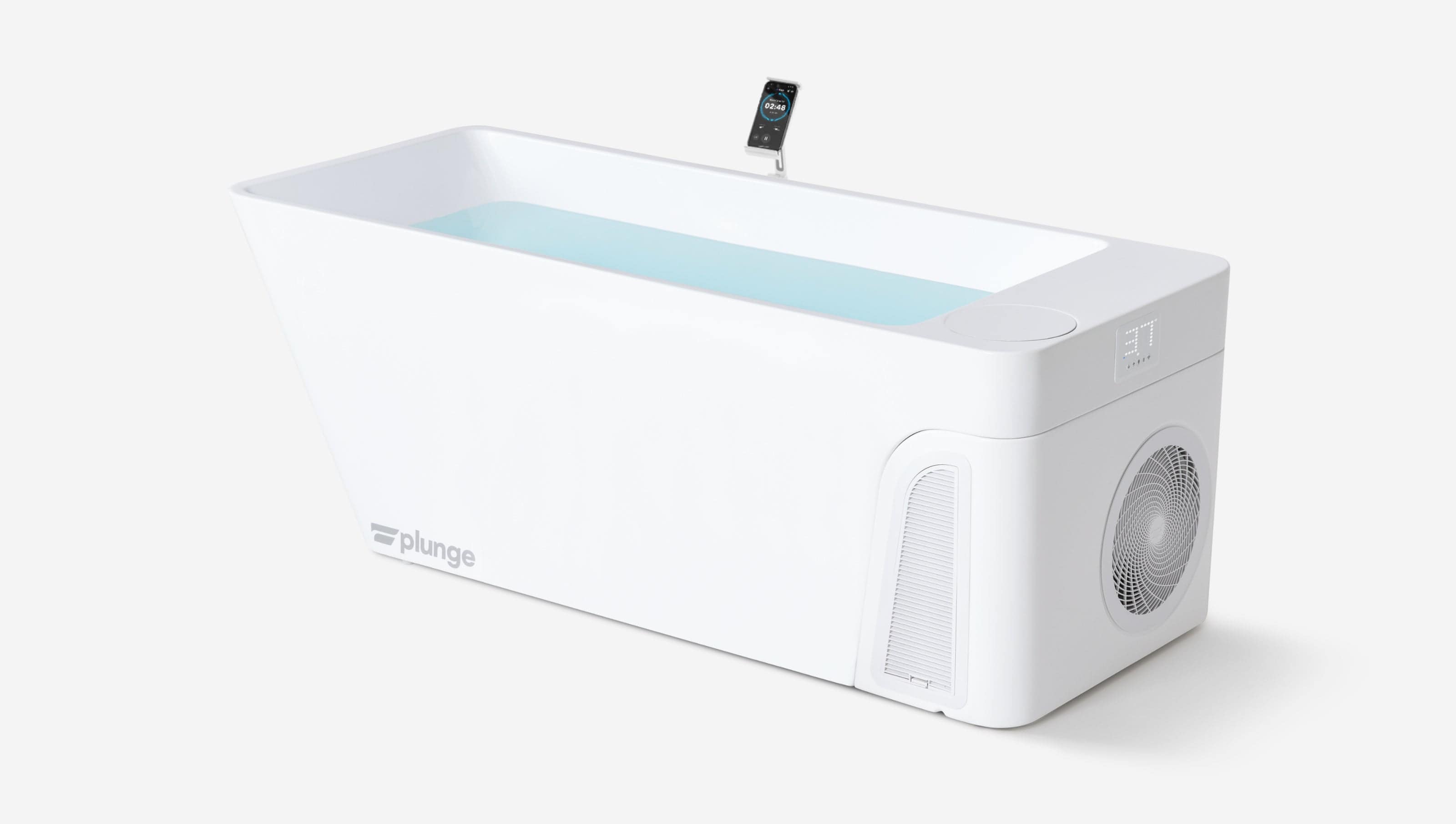


Plunge Air. Plunge photography.
See the specifications and priceBuy the Plunge Air if you're unsure about the habit
The Air is an inflatable tub that weighs 28 lbs empty, so it fits in the back of a car, and Plunge says it sets up in about fifteen minutes. Its compact chiller runs off an ordinary 110V/15A outlet.
On paper, 39°F looks like a compromise next to the 37°F above it. Two degrees at that end of the scale changes little about a plunge. Whether you keep plunging comes down to the gap between 39°F and a tub that needs ice in July.
You pay in the shell. Inflatable walls give when you lean back against them, and they won't last as long as acrylic. Buy the Air if you rent or might move, or if you'd like to see whether the habit survives a winter before you spend $3,000 more.
Where to buy
Fast recovery makes the Plunge Original the default
For most buyers we'd pick the Plunge Original. It holds 105 gallons in an acrylic shell, and its Pro Chiller Gen 2 takes the water down to 37°F and recovers at up to 12°F an hour. Recovery decides whether two people can go in back to back, and whether the water's ready again the morning after a hot afternoon.
Filtration and ozone sanitation are built in, which matters more than the spec sheet suggests. Draining and refilling 105 gallons is the chore that ends cold-plunge habits.
Plunge listed the cold-only Original at $8,490 when we checked on Oct 5, 2026, up from about $5,940 in September. Watch for a promotion before you pay that.
Where to buy


The Plunge (Original). Plunge photography.
See the specifications and priceThe All-In Gen 2's extra $1,500 pays for heating
Heating is the reason to buy the All-In Gen 2. It warms the tub to 104°F, so the contrast cycle happens in one vessel. Its 0.75 HP chiller also holds 37°F with the air at 120°F, and the Original can't match either figure. The chiller spec matters far more in Phoenix and Austin than in Vancouver.
Buy both if you have room for a plunge and a sauna, because a dedicated hot room beats a warm tub by a wide margin. Without that room, or where a standard chiller loses the fight every August, the All-In is the answer. Our contrast-therapy piece covers how to run the cycle once you have it.
Where to buy
The Plunge range sits in the middle of the field
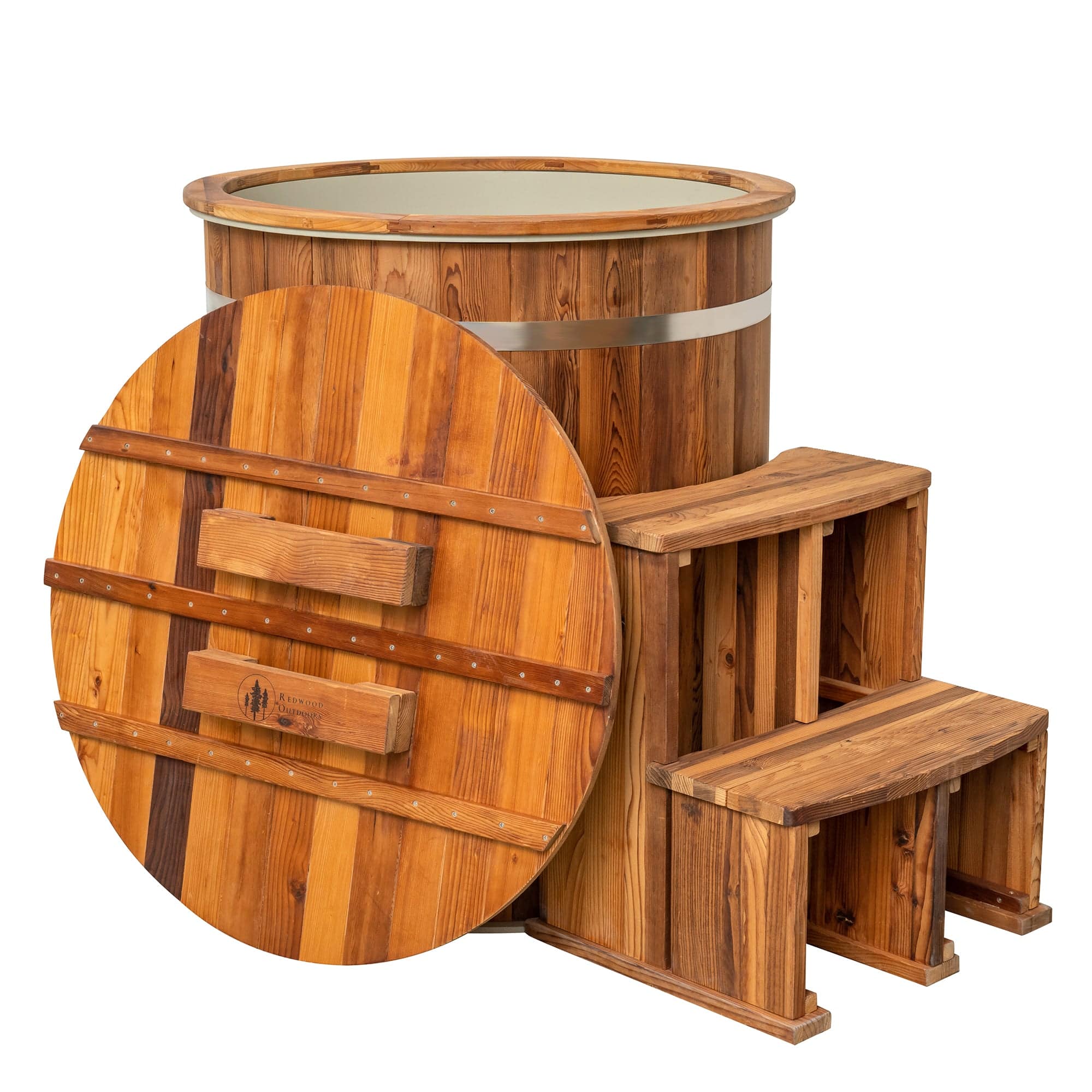
We priced Plunge against a tub on either side of it. Below it, Redwood's Alaskan is a 130-gallon thermowood barrel with no electricity anywhere, and it sells for $2,999. The Alaskan is superb in February and becomes an ice bill from May onward, so what a Plunge buys you over it is an end to buying ice.
Above it sits Sun Home's $14,599 Cold Plunge Pro, whose 1 HP chiller the maker rates down to 28°F across 150 gallons. Sun Home built it for a household or gym that keeps the water in constant use, and a single daily user never reaches that headroom. Plunge placed its range between those two on purpose and built that position around the Original.
Where to buy
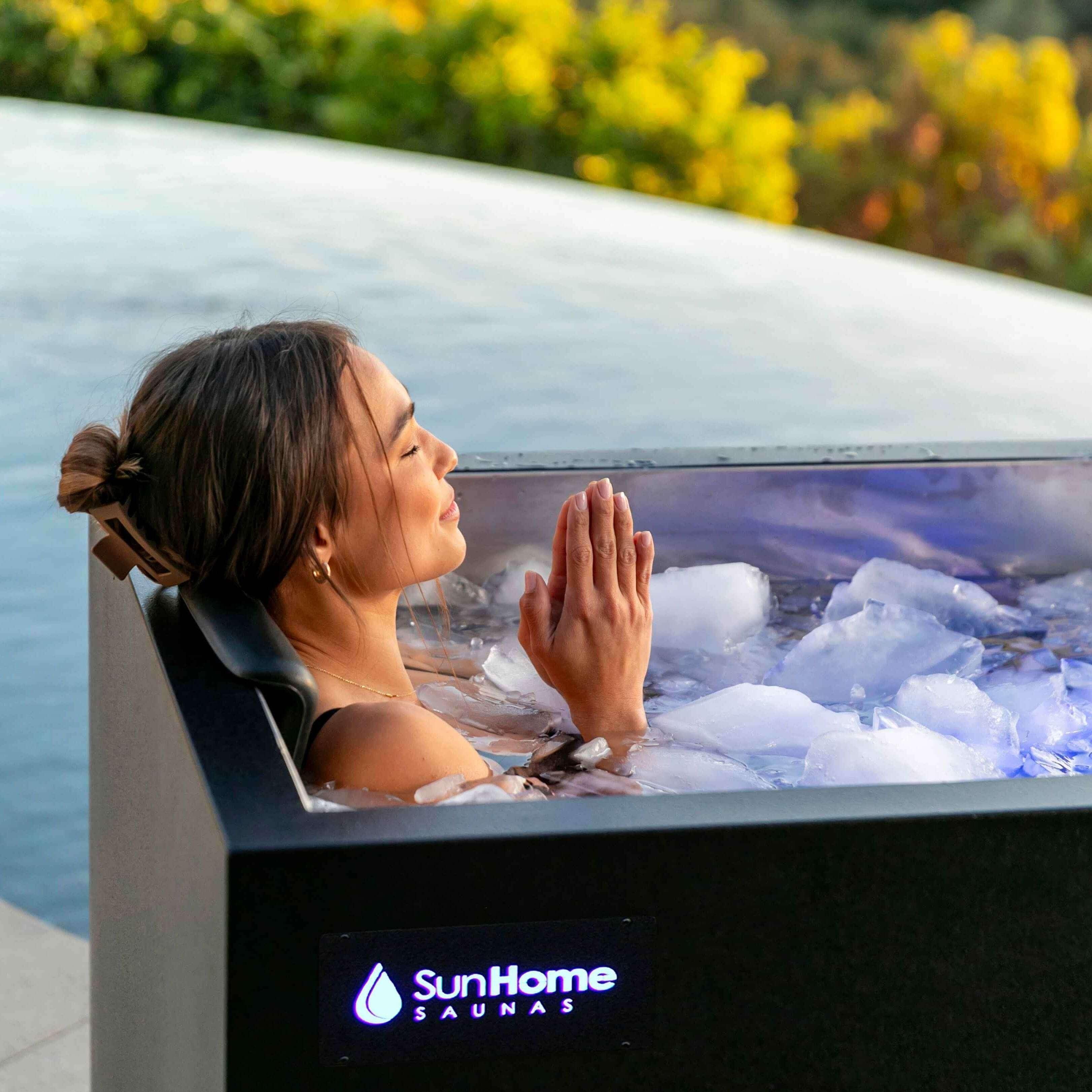
Sun Home Saunas Cold Plunge
Sun Home Cold Plunge Pro
Check the outlet and the deck before you order
We'd start with the circuit. Every tub here runs on 120V at 12 to 15A, so there's no panel work, though each one wants a dedicated outlet that it doesn't share with a freezer. Add a GFCI if the tub sits outside.
Siting comes next. Filled, these tubs weigh upward of 1,000 lb, and a deck has to be rated to carry that. If you own a sauna, think about where the tub sits relative to it, because nothing predicts whether anyone crosses from hot to cold in February better than the distance between them.
Check which promotion is live before you accept any price. Plunge discounts often enough that its listed price works as a starting position.
Common questions
- Is the Plunge worth it?
- Yes. The Plunge Original at $8,490 is the strongest value in the range, with an acrylic shell, 37°F water, 12°F per hour of recovery and filtration that keeps maintenance survivable. Next to a passive tub you're paying to stop buying ice, and ice is what ends most cold-plunge habits by June. The $14,599 tier adds capacity a single daily user will never reach.
- How cold does the Plunge get?
- The Plunge Air holds 39°F, and the Plunge Original and All-In Gen 2 both reach 37°F. A two-degree gap at that end of the scale changes little about a plunge. Recovery speed separates them, along with the All-In's ability to hold 37°F when the surrounding air is 120°F.
- Plunge Air or Plunge Original?
- Choose the Plunge Air if you rent or might move, or if you want to test the habit first. It packs down and weighs 28 lbs empty, and it sets up in about fifteen minutes. Once the tub has a permanent home, buy the Plunge Original, since rigid acrylic outlasts inflatable walls and its chiller recovers faster.
- Does a Plunge need a plumber or an electrician?
- No. A Plunge needs neither, because all three tubs run on a standard 120V household circuit at 12 to 15A. There's no plumbing, since you fill the tub with a hose and the built-in filtration handles the rest. Give the chiller a dedicated outlet that no other appliance shares, and use a GFCI outdoors.
- What does the All-In Gen 2 do that the Original does not?
- The All-In Gen 2 heats as well as chills, up to 104°F, so the same tub runs hot and cold. It also holds 37°F in ambient temperatures up to 120°F, which matters in a hot climate where a standard chiller struggles through summer. Together the two cost $1,500 more than the Plunge Original.
Sources
- 1.Altered brown fat thermoregulation and enhanced cold-induced thermogenesis in young, healthy, winter-swimming men. Cell Reports Medicine, 2021.
- 2.Effect of post-exercise sauna bathing on the endurance performance of competitive male runners. Journal of Science and Medicine in Sport, 2007.
- 3.Benefits and risks of sauna bathing. The American Journal of Medicine, 2001.
We review from makers’ documentation, owner reports and published research. How we choose products and write reviews.