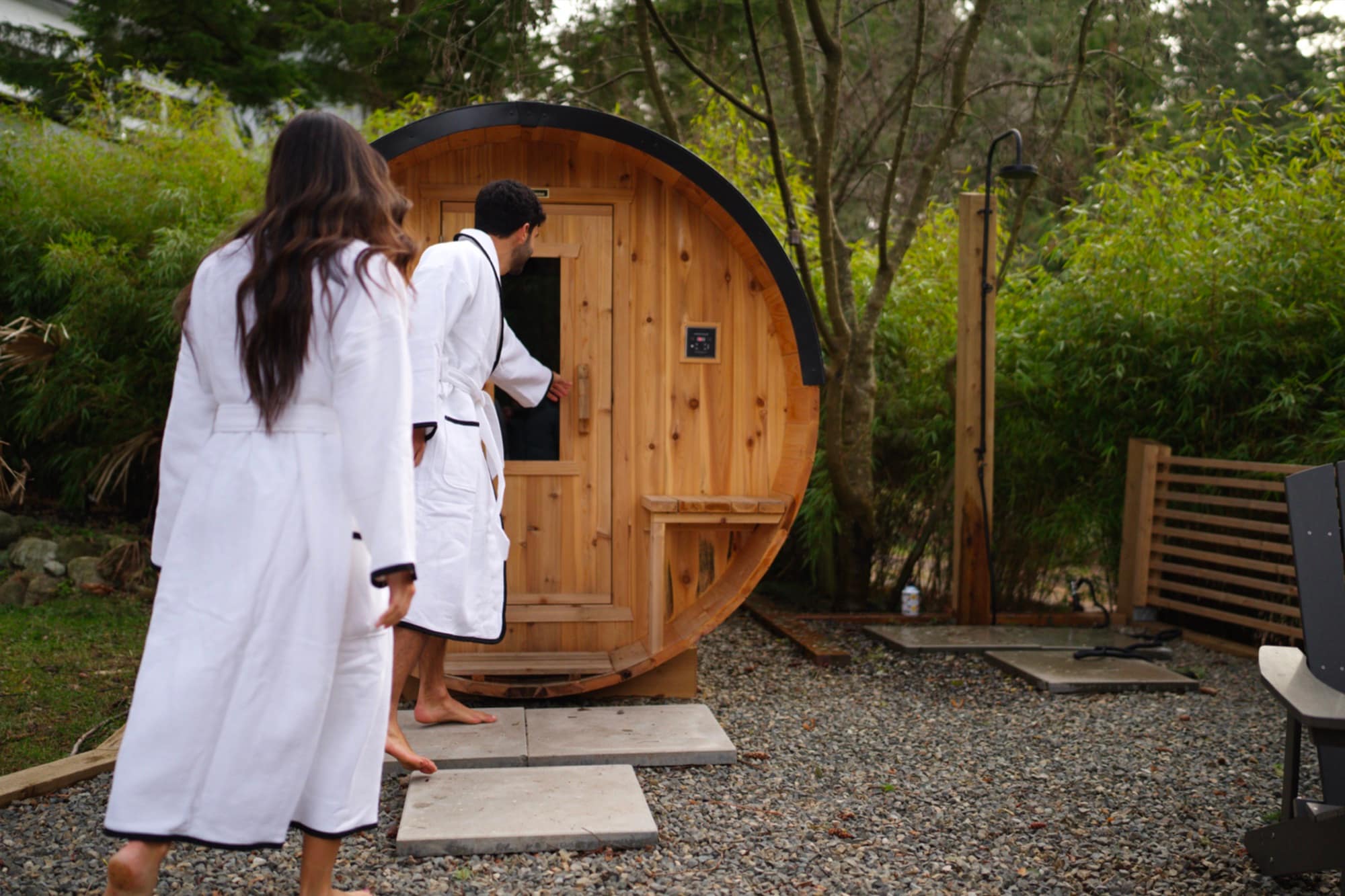
The Big Comparison
Barrel vs. cube: which outdoor sauna shape heats better?
We compare the barrel and the cube on heat-up time, air circulation, bench space and snow load, then match each shape to how you'll bathe.
By Adam Bognar, Editor

Buy the barrel if you bathe in twos and like fast heat, and you'll want a cube for groups of three to five or for long sessions on two tiers. We compared the two shapes that dominate the backyard-sauna market on heat-up time, circulation, capacity and siting, using the makers' specifications and the geometry of each shape.
Nootka builds both shapes, so compare its barrels with the Cube in our Nootka guide.
A barrel holds less air, so the same heater has less to warm
Draw a circle inside a square and it fills a little under four-fifths of it. That's why a barrel holds about 21% less air than a box of the same width and length, by our math. Put the same benches and the same heater in both shapes, and the barrel has less air to bring up to temperature. Warm-up still depends on the heater's output and the insulation, and a January night adds its own delay.
Nootka gives the clearest example, and the figures are its own. It quotes 10 to 15 minutes for its barrels to reach 194°F and 30 to 45 for its Cube, without saying what temperature either one starts from. The Cube also seats a fifth person, so the two aren't a like-for-like test. Nootka pitches the barrel's curve for circulation and says there are no corners for the air to get trapped in.
| Barrel | Cube | |
|---|---|---|
| Air for the same width and length | About 21% less, by our math | More |
| Nootka's quoted warm-up to 194°F | 10 to 15 minutes (8ft and 10ft) | 30 to 45 minutes (Cube) |
| Bench heights | One level | Hot upper bench, gentler lower bench |
| Benches (Nootka) | Two facing benches 21 inches deep | L-shaped upper bench 18.5 inches deep over a lower step |
| Glass and extras | Small window option; the 10ft Almost Heaven Shenandoah adds a changing room | Bigger glass, changing-room option |
| Rain and snow | Shed by geometry; bands re-tension | Needs a proper roof detail; metal roof offered |
| Wind | Lower profile; takes exposed sites | Larger frontal area |
| Best for | Twos, fast heat-ups, least fuss | Groups of three to five, long two-tier sessions |
| Nootka example | 8ft $8,200 to $10,574 (four seats); 10ft $9,300 to $11,674 (six) | Cube $13,250 to $14,340 (five) |
Nootka prices are its US ranges across every configuration, read Oct 7, 2026. All three models use the same 1.5-inch Western Red Cedar and a 9 kW Nootka heater. The warm-up times are Nootka's own and name no starting temperature. The air figure compares a circle with the square drawn around it.
Where to buy

Nootka Saunas Outdoor Saunas
Nootka 8ft Barrel Sauna
“On-site assembly where Nootka offers it makes this thick cedar barrel worth its higher price.”


Dundalk LeisureCraft Outdoor Saunas
LeisureCraft Canadian Timber Harmony Barrel Sauna CTC22W
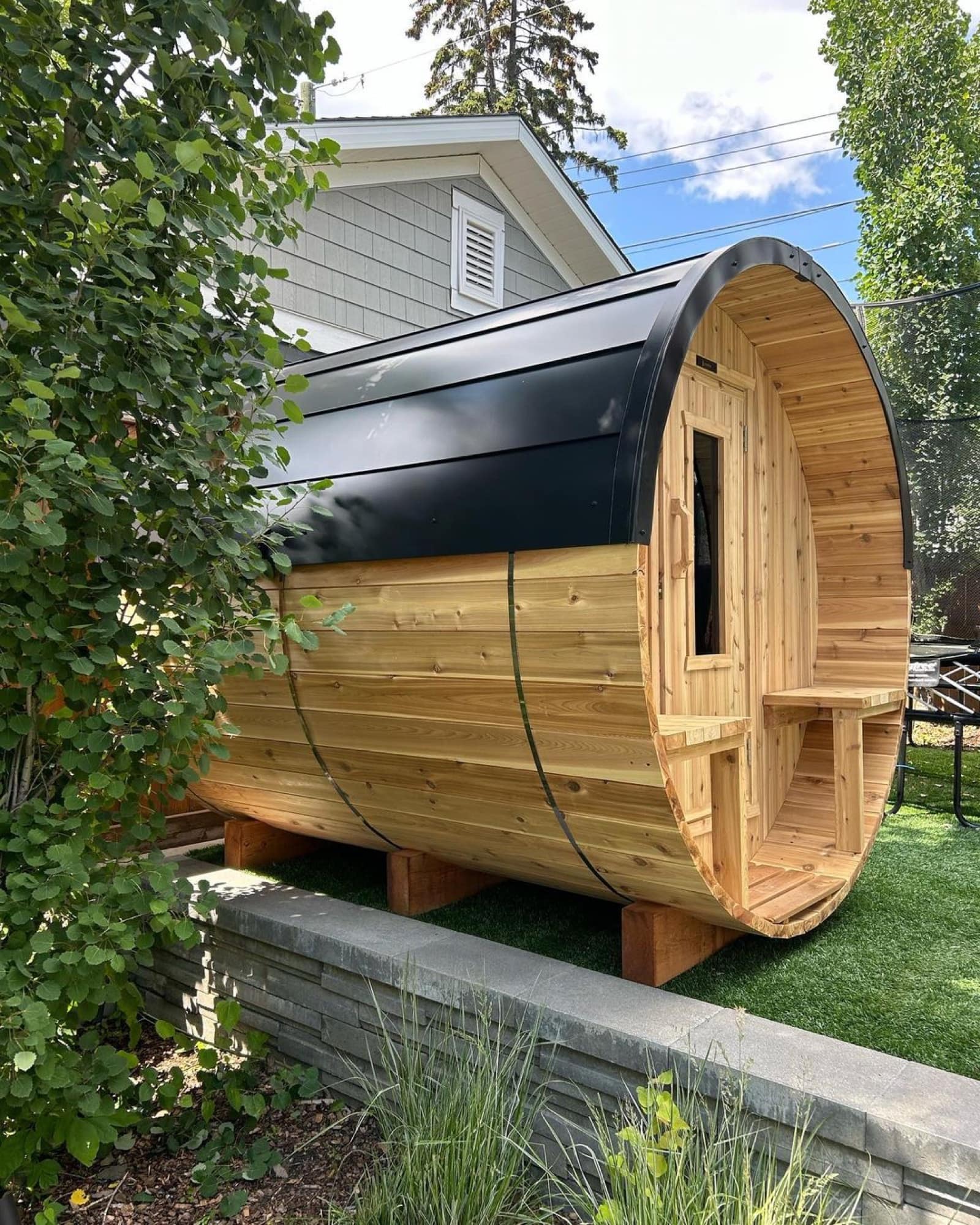
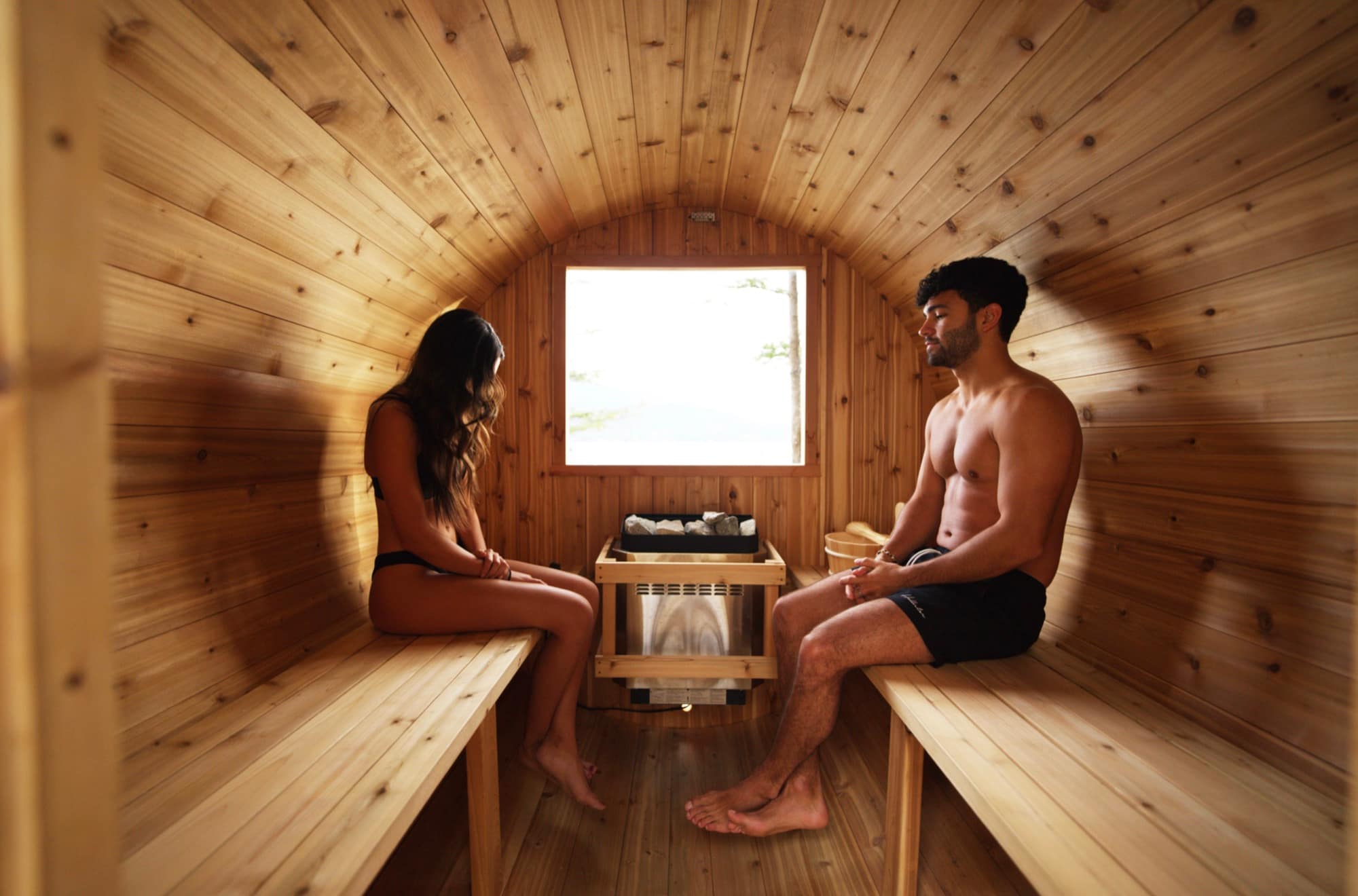
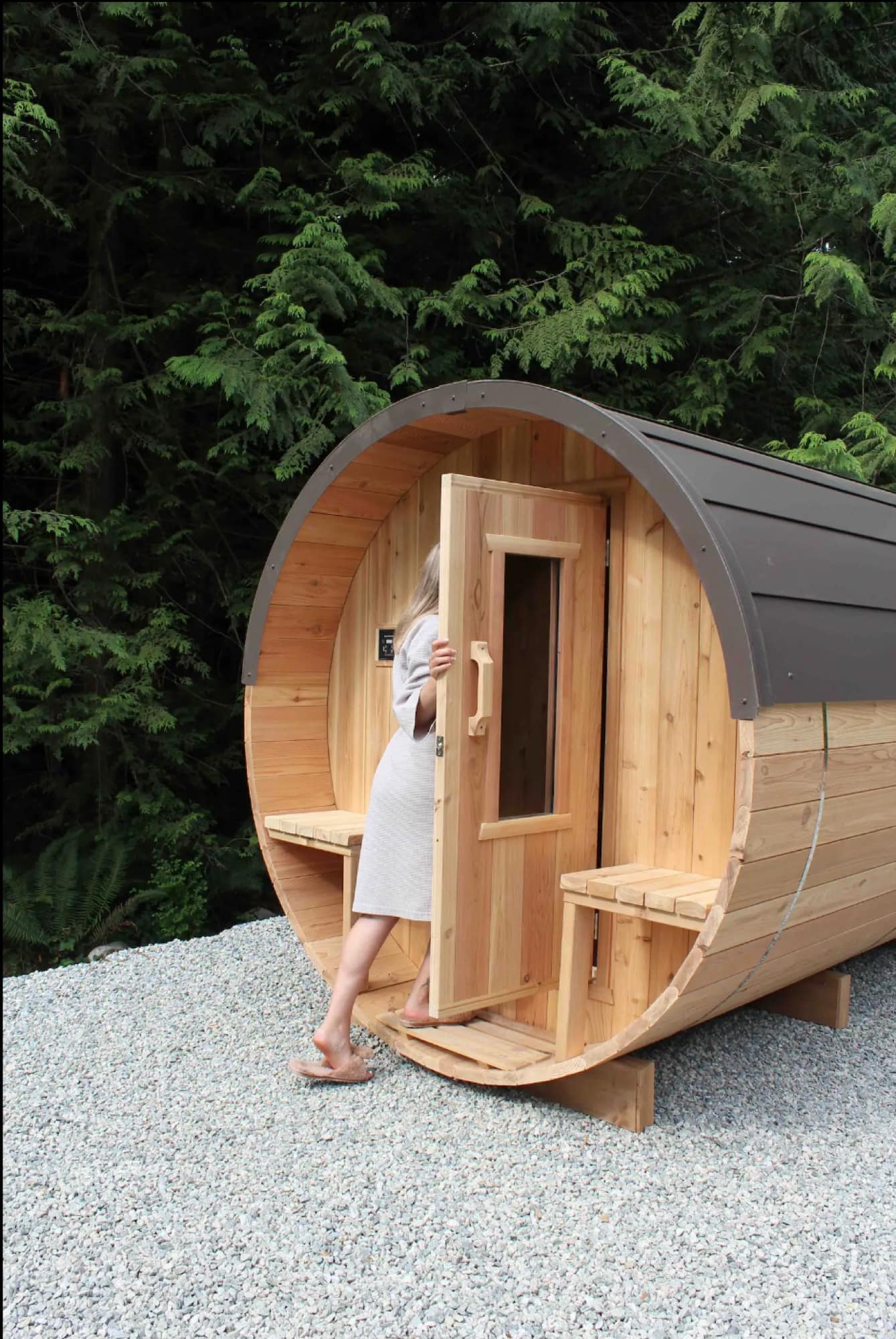
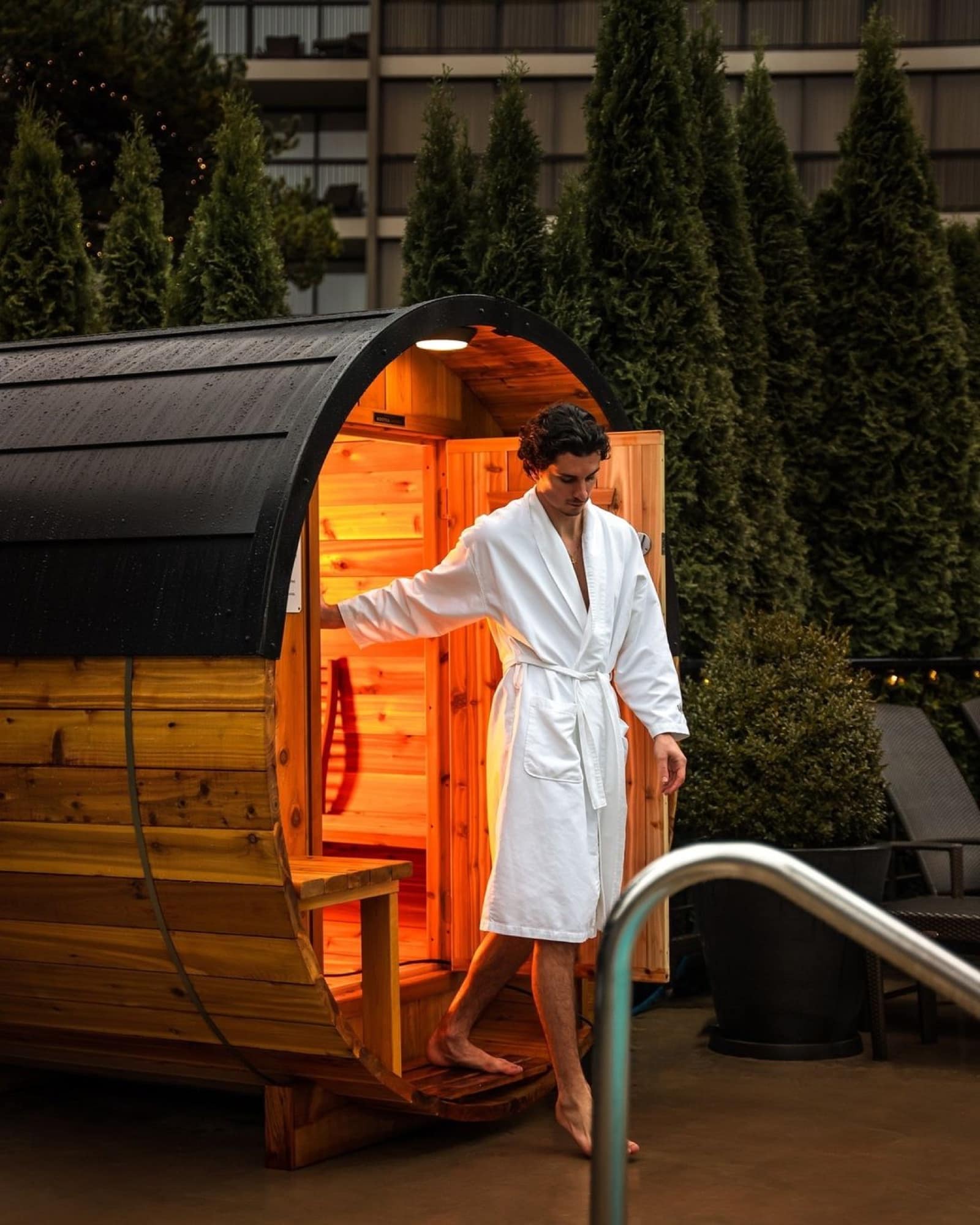
Nootka 8ft Barrel Sauna. Nootka Saunas photography.
See the specifications and priceCubes give you headroom and a second bench tier
The cube's right angles make room for what a barrel gives up, starting with full-height walls and two bench tiers. They also allow bigger glass and a changing-room option. Heat stratifies in a more useful way too, with a proper hot upper bench and a gentler lower one, where a barrel's benches all sit at one height. If three to five people will share your sauna, they'll fit better on the cube's two tiers.
Check the bench depth if you want to lie down. Nootka's Cube puts its upper bench 18.5 inches deep, and Nootka says its barrels' 21-inch benches suit lying down as well as sitting.
A barrel can still have a changing room when it's long enough. Almost Heaven's Shenandoah splits a ten-foot barrel into a six-foot hot room for four to six and a four-foot room to change in, and it sells for $7,455 at Select Saunas.
Outside
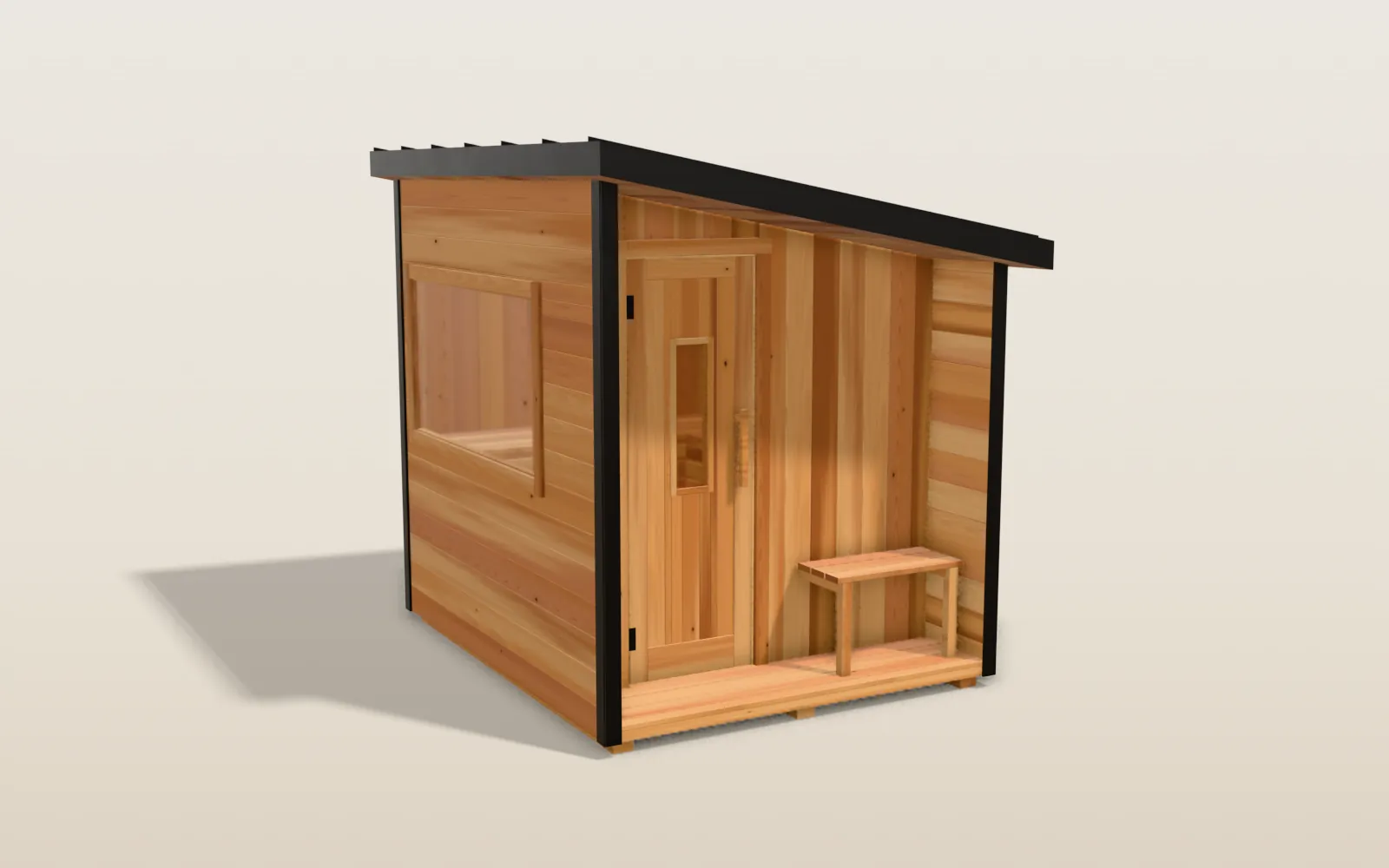
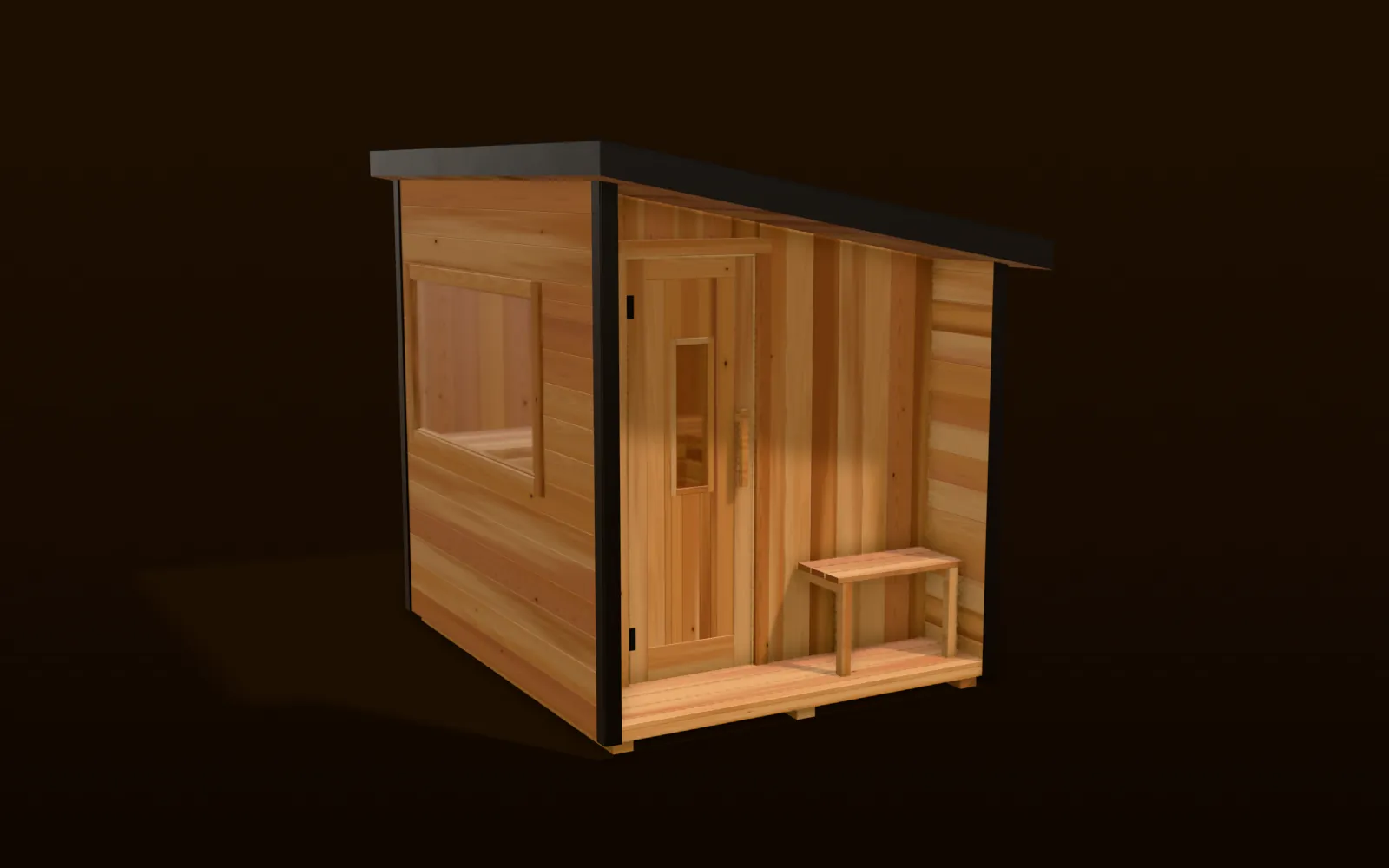
Black metal panels come standard on the Cube. The pitch carries rain and snow off the side away from the door.
The roof runs out over it, so you get a dry step and a cedar bench outside the door.
Order it on the left or the right and the roof slopes away from it either way. Full glass costs $500 more than the cedar door.
The 10 mm tempered glass sits in the side wall over the heater. Its bottom edge clears the upper bench.
The Cube stands 8 feet tall on a 6 ft 5 in by 7 ft 10 in footprint and weighs 2,350 pounds. Give it a level pad that drains well.
Set the temperature and the session length here. The standard panel starts a session on the spot, and the LTE controller, a $375 upgrade, adds Nootka's app so the heat can come on while you're still driving home. Nootka steers outdoor buyers away from Wi-Fi because the signal struggles to reach a sauna across a yard.
Inside
Up top, 33.5 inches off the floor, an L-shaped bench 18.5 inches deep sits in the hottest air. The 17-inch lower tier runs gentler and works as a step.
It runs on a 240V, 50A circuit, and Nootka says it takes the Cube to 194°F in 30 to 45 minutes without naming a starting temperature. The bench layout leaves no floor for a wood stove, so the Cube is electric only.
At 30 by 60 inches it's twice the size of the barrel's rear window.
The Lights package puts two warm strips under the seats. They light the floor and keep the glare out of your eyes. Nootka bundles them with its controller upgrades, starting at $215.
Nootka's essentials kit puts this cedar bucket and ladle in the box with a sand timer. It comes free with a sauna: add the kit to your cart and the SAUNAMONTHLY discount takes it off in the cart.
We built this model from Nootka's drawings and photographs, so small details can differ from the sauna that arrives.
Where to buy

Nootka Saunas Outdoor Saunas
Nootka Cube Sauna
“You buy this inch-and-a-half cedar cube once and pass it down.”

Almost Heaven Outdoor Saunas
Almost Heaven Shenandoah 4-6 Person Barrel Sauna with Changing Room
“Buy this barrel if you want a four-foot changing room out of the weather.”

SaunaLife Outdoor Saunas
SaunaLife CL5G Outdoor 4-Person Cube Sauna

Dundalk LeisureCraft Outdoor Saunas
LeisureCraft Canadian Timber Luna 2-4 Person Cube Sauna
Barrels shed snow and handle exposed sites better
A barrel sheds rain and snow by geometry, and you can re-tighten its staves as the wood moves. The flat-roofed cube needs a proper roof detail, which is why many makers offer a metal roof. It's fine to set either shape on a gravel pad. In wind, a barrel's smaller frontal area and lower profile take exposed sites better.
Which shape should you buy?
Buy the barrel if it's mostly two of you and you want the least air to heat and the least fuss per session. The cube suits a sauna that doubles as a social room, and its two tiers let you move between hot and gentler heat through a long session.
Nootka makes our comparison unusually clean. It builds its 8ft and 10ft barrels and the Cube from the same 1.5-inch Western Red Cedar and runs all three on a 9 kW heater, so most of the difference comes down to shape and size. Size the room to your crowd, then pick the shape.
Where to buy
Nootka Saunas Outdoor Saunas
Nootka 8ft Barrel Sauna
“On-site assembly where Nootka offers it makes this thick cedar barrel worth its higher price.”

Nootka Saunas Outdoor Saunas
Nootka 10ft Barrel Sauna
“This longer barrel keeps the 8ft's cedar build and makes room for six.”
Nootka Saunas Outdoor Saunas
Nootka Cube Sauna
“You buy this inch-and-a-half cedar cube once and pass it down.”
Common questions
- Do barrel saunas heat up faster than cube saunas?
- Yes, all else equal. A barrel sauna encloses less air than a cube of the same width and length, so the same heater has less to warm. Nootka quotes 10 to 15 minutes to 194°F for its barrels and 30 to 45 for its larger Cube, without naming a starting temperature. The heater's output and the room's insulation move those times too, and so does the weather.
- Which lasts longer, a barrel or a cube sauna?
- Build quality outweighs shape in how long a barrel or cube sauna lasts. Thick staves of cedar or thermally modified wood weather decades either way. A barrel's bands re-tension as wood moves, and a cube relies more on a sound roof detail.
- Can a barrel sauna have a changing room?
- Yes. The longer barrel saunas can fit one, and Almost Heaven's Shenandoah measures about 7 by 10 feet, with a six-foot hot room for four to six and a four-foot changing room in front. Select Saunas sells it for $7,455 with an 8 kW Harvia on a 40A circuit. The hot-room door opens into the changing room, so less heat escapes when someone steps out.
Sources
- 1.Cardiovascular and Other Health Benefits of Sauna Bathing: A Review of the Evidence. Mayo Clinic Proceedings, 2018.
- 2.Association Between Sauna Bathing and Fatal Cardiovascular and All-Cause Mortality Events. JAMA Internal Medicine, 2015.
We review from makers’ documentation, owner reports and published research. How we choose products and write reviews.