Field Notes
Can you wear a WHOOP in the sauna? Only where the air stays under 140°F
WHOOP says to avoid heat above 140°F (60°C), which rules out a traditional sauna. We read each tracker maker's limit and explain what sauna heat does to your readings.
By Adam Bognar, Editor

You can wear a WHOOP in most infrared cabins, and WHOOP's own guidance rules out a traditional sauna. We read what WHOOP, Apple and Oura each say about heat and set it against sauna temperatures. WHOOP recommends avoiding anything above 140°F (60°C), and a traditional sauna runs at 80–100°C. Most infrared cabins run at 45–60°C, at or under that line, though a few are rated hotter. The hardware and the data both pay a price when you go over, and we go through it device by device.
A traditional sauna runs past every tracker's limit
WHOOP says to avoid temperatures above 140°F (60°C). Apple says its Series and SE watches work best up to 35°C (95°F) and lists wearing one in a sauna among the things to avoid, and it rates the Ultra for wear up to 55°C (130°F). Oura rates its ring to 52°C (125°F) and says you can safely wear it in a sauna, though it warns that long exposure above 60°C (140°F) may damage the battery.
A traditional sauna at 80–100°C runs past every one of those limits. An infrared cabin at 45–60°C stays within WHOOP's limit and still runs hotter than a standard Apple Watch is built for. Check your cabin's top setting, though, because Sunlighten says its Amplify II can reach 170°F (77°C).
Going over spec speeds up wear, and it rarely means instant failure. Batteries degrade faster when they're hot, and adhesives and bands soften. Repeated thermal cycling is hard on any sealed electronic, so the heat puts your device's longevity at stake far more than your safety.
Where to buy
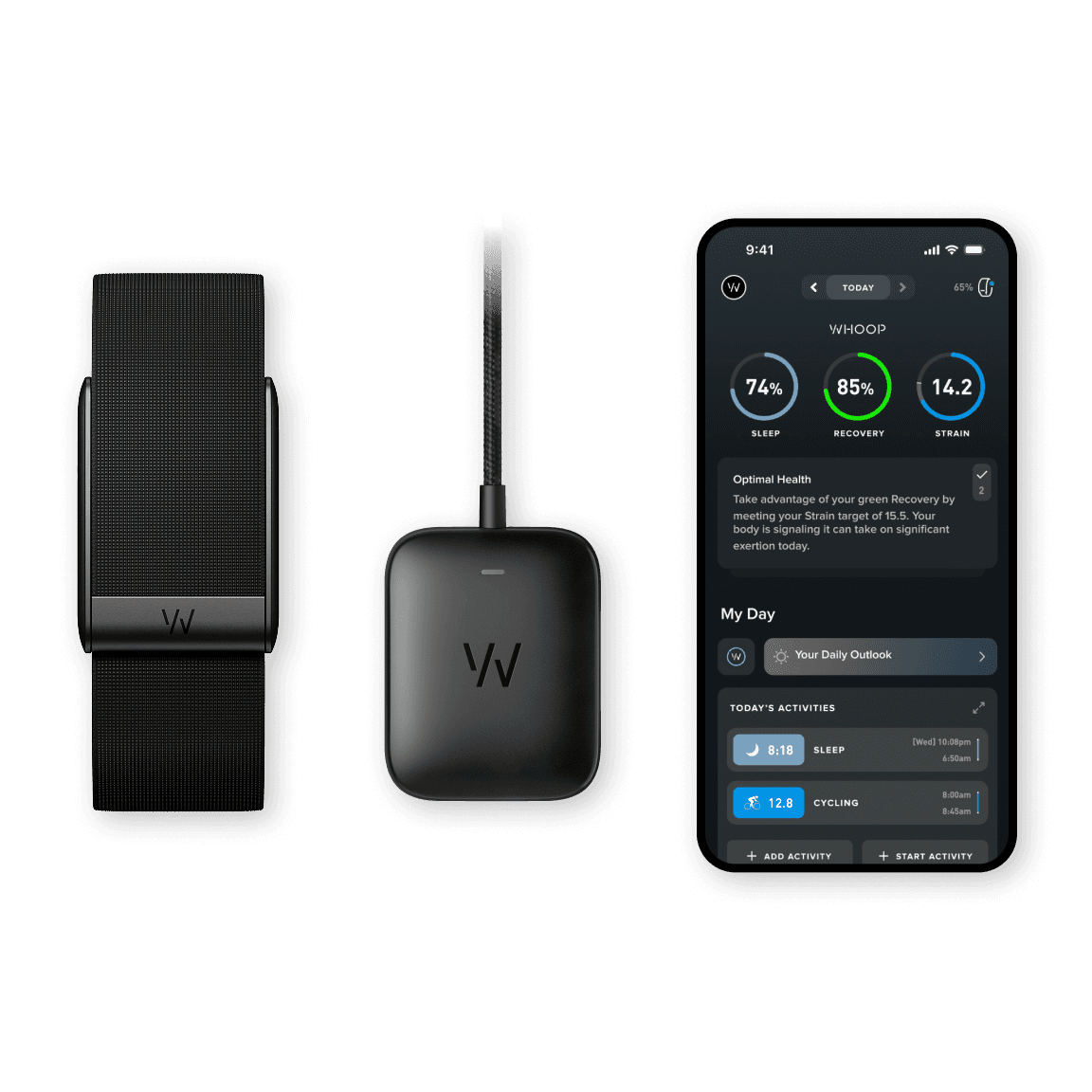
WHOOP Recovery & Tracking
WHOOP 5.0
“Weeks of heat adaptation show up well on this band, which needs a subscription and care in the heat.”

Oura Recovery & Tracking
Oura Ring 4
“Oura says this screenless ring is safe to wear in a sauna and rates it to 52°C (125°F).”
Sauna heat sends heart-rate and skin-temperature readings haywire
The data gets strange even when the hardware survives, and knowing why keeps you from panicking at your recovery score. Optical heart-rate sensors (the green lights on a wrist) rely on steady blood flow and good skin contact. In the heat you're vasodilated and sweating while you sit still, which is close to the worst case for an optical reading. Expect a jumpy or inflated heart rate.
Any skin-temperature sensor will peg high, because it's reading the sauna air. On a WHOOP that can distort strain and skin-temperature trends, and a session near bedtime can throw off an Oura's night-based reading. The device is working, and it's reporting an environment it wasn't designed to measure.
Short sessions and a quick wipe protect the tracker
If you wear it anyway, keep your sessions short and wipe the device dry the moment you step out, because sweat plus heat is the corrosive combination. Never leave it sitting on a hot bench or in a hot car afterward. A device baking on its own gets hotter than one on your cooling skin.
Read the numbers with the heat in mind. Sauna-session heart rate is light-cardio noise, so don't log it as a workout. Ignore single-session skin-temperature spikes too. Heat shows up in the multi-week trend, as resting heart rate drifts down while you adapt. A tracker is good at measuring that trend once you stop over-reading the hot minutes.
Where to buy
WHOOP Recovery & Tracking
WHOOP 5.0
“Weeks of heat adaptation show up well on this band, which needs a subscription and care in the heat.”
How does each tracker handle a sauna session?
Oura is the most relaxed of the three makers about saunas. It says you can safely wear the ring in one and rates it to 52°C (125°F), and the ring has nothing to snag. The metal conducts heat to your finger, so take it off if it gets hot to the touch.
WHOOP's limit of 140°F (60°C) covers most infrared cabins and rules out a traditional sauna. Inside that limit, expect its skin-temperature and strain numbers to read oddly, and dry the band afterward.
Apple's guidance is the strictest. It rates the Series and SE to 35°C (95°F) and tells owners not to wear them in a sauna, and it keeps the Ultra out of saunas above 55°C (130°F). If you want accurate sauna heart rate, an electrical chest strap reads better in the heat than any optical wrist sensor, so check the strap's own temperature rating before you take it in.
Common questions
- Will the sauna damage my WHOOP or Apple Watch?
- It can wear them out faster. A traditional sauna runs past WHOOP's 140°F (60°C) limit and far past the 35°C (95°F) Apple sets for its Series and SE watches, and Apple tells owners to keep those watches out of the sauna. Heat above a device's rating speeds up battery and adhesive wear, and leaving it on a hot bench or skipping the wipe-down makes that worse.
- Why is my heart rate wrong in the sauna?
- Your heart rate reads jumpy or too high in the sauna because optical wrist sensors need steady blood flow and firm, dry skin contact. Sitting still while you sweat and your vessels dilate is the hardest case for an optical reading. A chest strap is far more accurate if you need real numbers.
- Should I take my Oura ring off in the sauna?
- You don't have to. Oura says you can safely wear the ring in a sauna and rates it to 52°C (125°F), with a warning that long exposure above 60°C (140°F) may damage the battery. Take it off if the metal gets hot to the touch, since the band carries heat into your finger, and ignore any temperature reading it takes in the sauna.
- Can you wear a WHOOP in an infrared sauna?
- Yes, in most infrared saunas. WHOOP recommends keeping the band out of temperatures above 140°F (60°C), and most infrared cabins run at 45–60°C (113–140°F). Some cabins go hotter, since Sunlighten rates its Amplify II to 170°F, so keep the thermostat at 140°F or below if the WHOOP stays on.
- What's the best wearable for a dry sauna?
- No wrist or finger tracker is rated for a traditional dry sauna at 80–100°C. Of the three makers we read, Oura is the most tolerant, rating its ring to 52°C (125°F) and saying you can safely wear it in a sauna. For heart rate in the heat, an electrical chest strap reads more accurately than any optical sensor, so check the strap's own temperature rating first.
- What's the point of tracking sauna sessions at all, then?
- The multi-week trend is the point. Regular heat produces a measurable adaptation, as resting heart rate drifts down and sleep improves over weeks. A wearable captures that multi-week signal well, and it's the subject of our companion piece on watching heat adaptation in your data.
Sources
- 1.WHOOP Basics: Can I wear my WHOOP in the sauna?. WHOOP Support, 2026.
- 2.Keep Apple Watch within acceptable operating temperatures. Apple Support, 2026.
- 3.About Apple Watch water resistance. Apple Support, 2026.
- 4.Product Safety & Use. Oura, 2026.
- 5.Effect of post-exercise sauna bathing on the endurance performance of competitive male runners. Journal of Science and Medicine in Sport, 2007.
- 6.Sauna use as a lifestyle practice to extend healthspan. Experimental Gerontology, 2021.
- 7.Clinical Effects of Regular Dry Sauna Bathing: A Systematic Review. Evidence-Based Complementary and Alternative Medicine, 2018.
We review from makers’ documentation, owner reports and published research. How we choose products and write reviews.


